
“
Keep Pots Clean Or Family Gets Sick
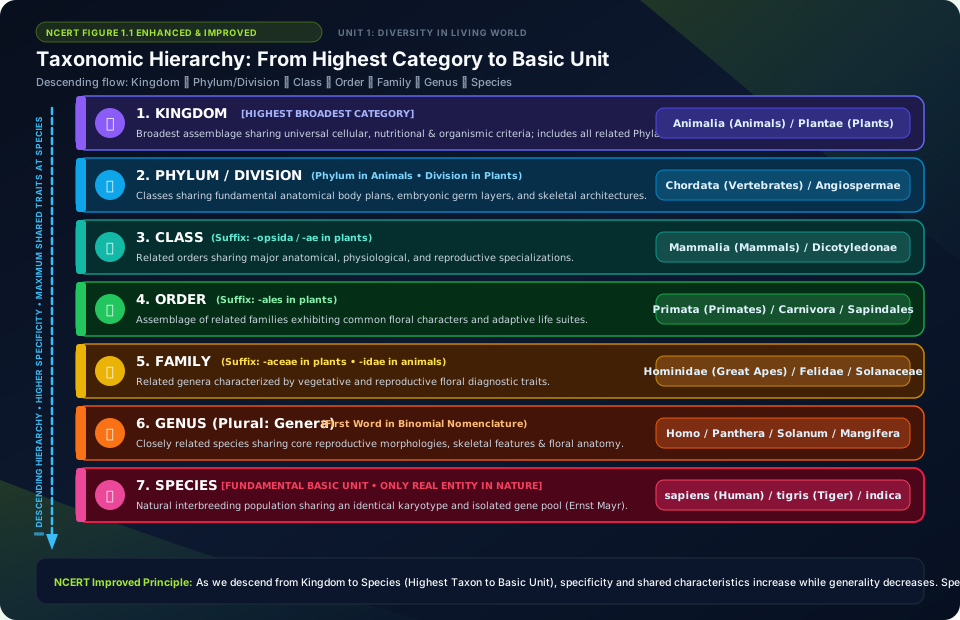
Picture This (Mental Hook): Imagine a furious royal head chef shouting in the castle kitchen: 'If the scullery boy forgets to Keep Pots Clean, the entire royal Family Gets Sick from biological food poisoning!'
📊 Visual Diagram & Mental Flow:
[👑 KINGDOM] (Animalia) ▲ HIGHEST TAXON (Broadest, Least common traits)
↓
[🏛️ PHYLUM] (Chordata) │
↓ │ Taxonomic specificity INCREASES
[🎓 CLASS] (Mammalia) │ Number of shared traits INCREASES
↓ │
[📦 ORDER] (Primata) │
↓ │
[👨👩👧👦 FAMILY] (Hominidae) │
↓ │
[🧬 GENUS] (Homo) ▼
[🌿 SPECIES] (sapiens) ● BASIC UNIT (Narrowest, Maximum shared traits)🔍 The Decoded Sequence:
K
Keep
Kingdom (Highest taxonomic category)
P
Pots
Phylum (Animals) / Division (Plants)
C
Clean
Class
O
Or
Order
F
Family
Family
G
Gets
Genus
S
Sick
Species (Fundamental basic unit of classification)
Examiner Trap / Never Forget: Direction matters! Going from Kingdom to Species, the number of common characteristics INCREASES. Going from Species to Kingdom, the degree of generality INCREASES. In plants, the term 'Division' is used instead of Phylum!
“
Monkeys Play Funny Piano Always & People Always Buy Donuts
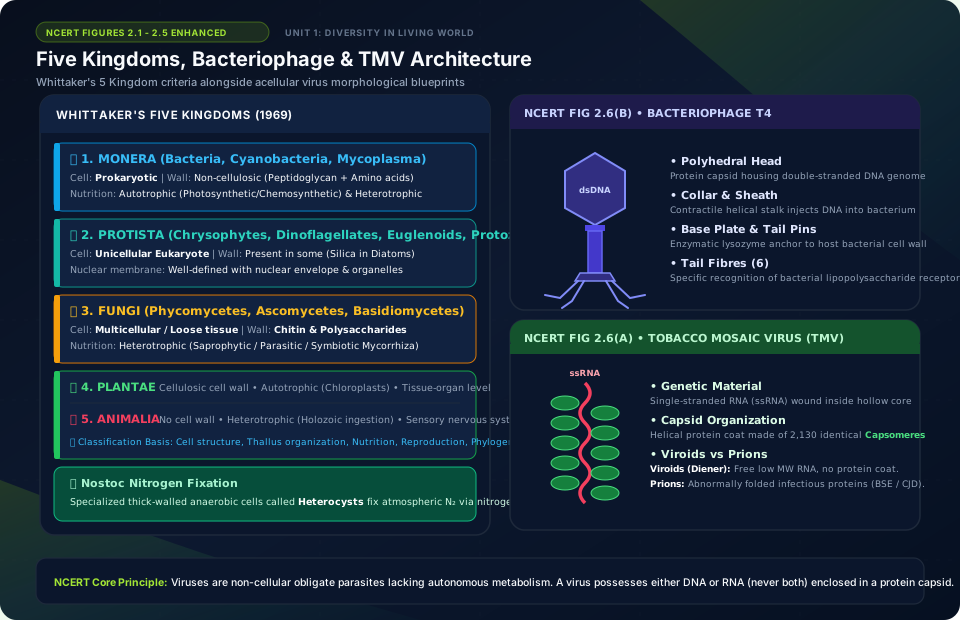
Picture This (Mental Hook): Whittaker walks into a biological concert and sees trained Monkeys Play Funny Piano Always! Outside the auditorium, hungry mycologists line up because People Always Buy Donuts!
📊 Visual Diagram & Mental Flow:
5 KINGDOMS:
[M]onera (Bacteria) ──► [P]rotista (Amoeba) ──► [F]ungi (Molds) ──► [P]lantae ──► [A]nimalia

4 FUNGI CLASSES:
┌─────────────────┬──────────────────────┬───────────────────────┐
│ Class           │ Common Name          │ Landmark Example      │
├─────────────────┼──────────────────────┼───────────────────────┤
│ [P]hycomycetes  │ Algal Fungi          │ Rhizopus, Mucor, Albugo│
│ [A]scomycetes   │ Sac Fungi            │ Yeast, Penicillium    │
│ [B]asidiomycetes│ Club Fungi / Puffs   │ Agaricus (Mushroom)   │
│ [D]euteromycetes│ Fungi Imperfecti     │ Alternaria, Trichoderma│
└─────────────────┴──────────────────────┴───────────────────────┘
🔍 The Decoded Sequence:
M-P-F-P-A
Monkeys Play Funny Piano Always
Monera, Protista, Fungi, Plantae, Animalia (5 Kingdoms)
P
People
Phycomycetes (Algal fungi; aseptate & coenocytic mycelium)
A
Always
Ascomycetes (Sac fungi; asci with ascospores)
B
Buy
Basidiomycetes (Club fungi; basidiospores on basidium)
D
Donuts
Deuteromycetes (Imperfect fungi; sexual stage unknown/absent)
Examiner Trap / Never Forget: Deuteromycetes reproduce ONLY by asexual spores (conidia). Once a sexual stage is discovered, they are moved to Ascomycetes or Basidiomycetes!
“
Grass, Potato, Rose: Chlorophyll A Is Everywhere, Brown Takes C, Red Takes D
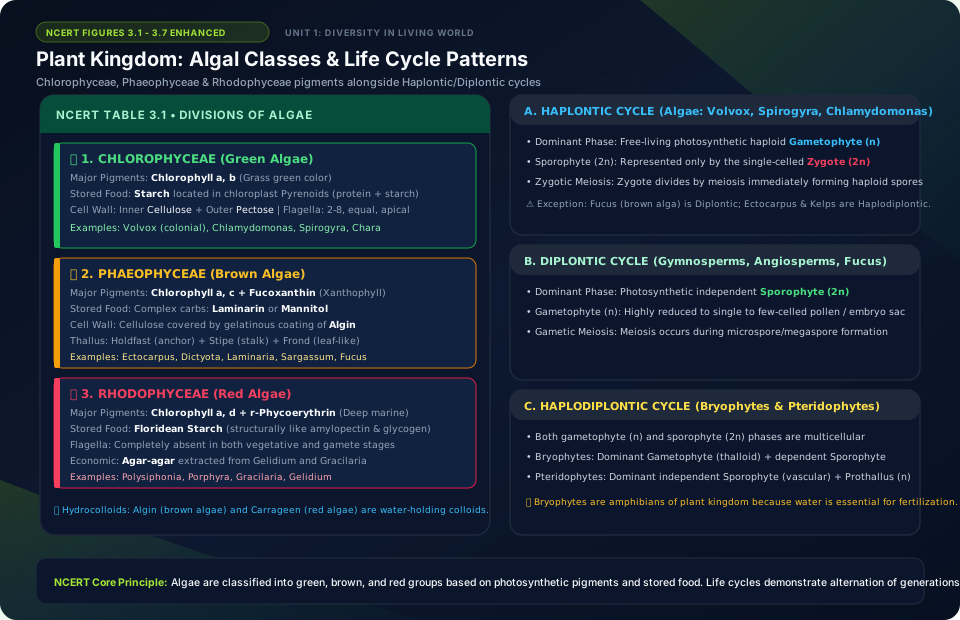
Picture This (Mental Hook): Imagine a green lawn of Grass (Chlorophyceae), a muddy Brown Potato (Phaeophyceae), and a glowing Red Rose (Rhodophyceae). Everyone drinks Chlorophyll A for breakfast; the potato adds Vitamin C, and the red rose takes Vitamin D in the sun!
📊 Visual Diagram & Mental Flow:
┌───────────────┬────────────┬──────────────┬────────────────────────┬──────────────────────┐
│ Class         │ Color      │ Pigments     │ Stored Food            │ Cell Wall Matrix     │
├───────────────┼────────────┼──────────────┼────────────────────────┼──────────────────────┤
│ Chlorophyceae │ 🟢 Green   │ Chl a + b    │ Starch (Pyrenoids)     │ Cellulose            │
│ Phaeophyceae  │ 🟤 Brown   │ Chl a + c    │ Laminarin & Mannitol   │ Cellulose + Algin    │
│               │            │ + Fucoxanthin│                        │                      │
│ Rhodophyceae  │ 🔴 Red     │ Chl a + d    │ Floridean Starch       │ Cellulose + Pectin   │
│               │            │ + r-Phycoerythrin                      │ + Polysulphate esters│
└───────────────┴────────────┴──────────────┴────────────────────────┴──────────────────────┘
🔍 The Decoded Sequence:
Chl a+b
Grass
Chlorophyceae (Green Algae) -> Chlorophyll a & b, stores Starch
Chl a+c
Potato
Phaeophyceae (Brown Algae) -> Chlorophyll a & c + Fucoxanthin, stores Laminarin/Mannitol
Chl a+d
Rose
Rhodophyceae (Red Algae) -> Chlorophyll a & d + r-Phycoerythrin, stores Floridean Starch
Examiner Trap / Never Forget: Floridean starch has a chemical structure very similar to amylopectin and glycogen! Brown algae have pear-shaped (pyriform) flagella attached laterally (2, unequal).
“
Poor Children Can Play All Afternoon And Make Every Human Cheerful
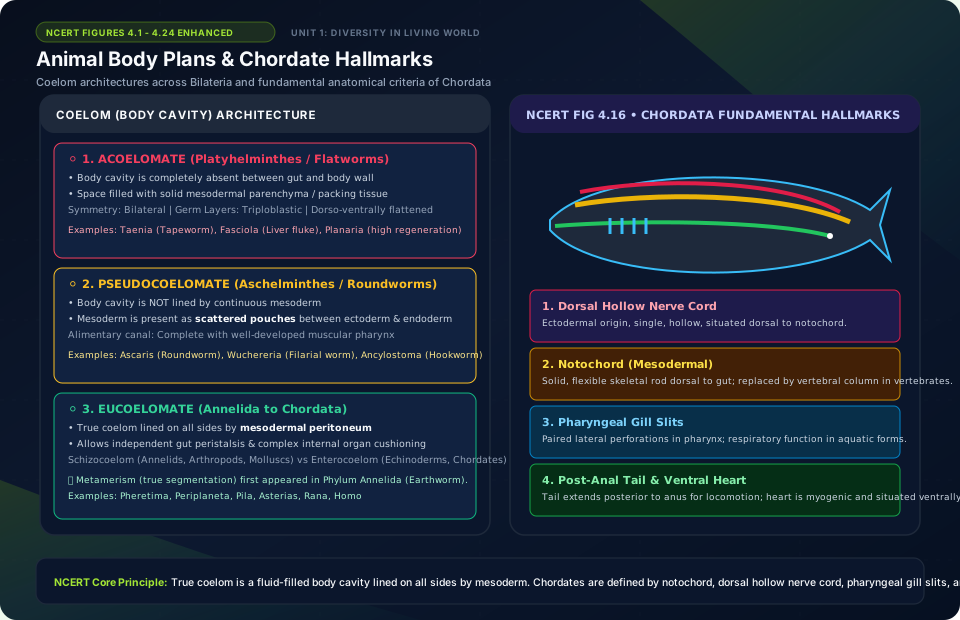
Picture This (Mental Hook): Picture a community park where Poor Children Can Play All Afternoon And Make Every Human Cheerful! Evolutionary complexity builds from cellular sponges all the way to thinking chordates.
📊 Visual Diagram & Mental Flow:
[P]orifera        (Cellular grade, Acoelomate)
   ↓
[C]nidaria        (Tissue grade, Radial symmetry)
   ↓
[C]tenophora      (Bioluminescent Comb Jellies)
   ↓
[P]latyhelminthes (Organ grade, Bilateral, FLAT = ACOELOMATE)
   ↓
[A]schelminthes   (Roundworms = ONLY PSEUDOCOELOMATE!)
   ↓
[A]nnelida ──► [A]rthropoda ──► [M]ollusca ──► [E]chinodermata ──► [H]emichordata ──► [C]hordata
└──────────────────────────────── EUCOELOMATES (True Coelom) ──────────────────────────────────┘
🔍 The Decoded Sequence:
P-C-C-P
Poor Children Can Play
Porifera, Cnidaria, Ctenophora, Platyhelminthes (Acoelomate)
A
All
Aschelminthes (Roundworms: ONLY PSEUDOCOELOMATE)
A-A-M-E-H-C
Afternoon And Make Every Human Cheerful
Annelida, Arthropoda, Mollusca, Echinodermata, Hemichordata, Chordata (True Eucoelomates)
Examiner Trap / Never Forget: Platyhelminthes are Triploblastic but Acoelomate! Aschelminthes are the ONLY pseudocoelomates in the entire animal kingdom (mesoderm scattered in pouches)!
“
Many Active Physicians Feel Bad: Pea, Tomato, Mustard, Dianthus, Marigold
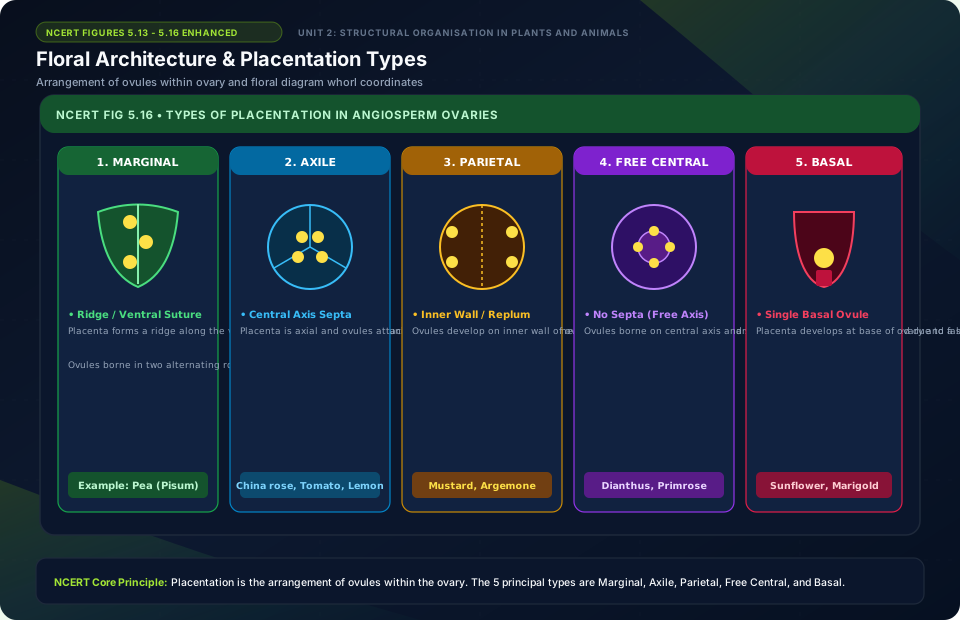
Picture This (Mental Hook): During a crazy biology symposium, Many Active Physicians Feel Bad after eating unwashed Pea pods, Citrus/Tomato salad, spicy Mustard seeds, Dianthus petals, and Marigold tea!
📊 Visual Diagram & Mental Flow:
┌───────────────┬──────────────────────┬───────────────────────────────────┐
│ Placentation  │ Meaning              │ High-Yield NEET Examples          │
├───────────────┼──────────────────────┼───────────────────────────────────┤
│ [M]arginal    │ Ridge along suture   │ Pea (Pisum)                       │
│ [A]xile       │ Multilocular central │ China rose, Tomato, Lemon         │
│ [P]arietal    │ Inner wall / septum  │ Mustard, Argemone (False septum!) │
│ [F]ree Central│ Central axis, no sept│ Dianthus, Primrose                │
│ [B]asal       │ Base of ovary, 1 ovul│ Sunflower, Marigold               │
└───────────────┴──────────────────────┴───────────────────────────────────┘
🔍 The Decoded Sequence:
M
Many
Marginal placentation (Pea)
A
Active
Axile placentation (Tomato, Lemon, China rose)
P
Physicians
Parietal placentation (Mustard, Argemone)
F
Feel
Free Central placentation (Dianthus, Primrose)
B
Bad
Basal placentation (Marigold, Sunflower)
Examiner Trap / Never Forget: Mustard and Argemone ovaries are unilocular initially, but become two-chambered due to the formation of a false septum called the REPLUM!
“
Dicot is OPEN with Cambium, Monocot is CLOSED & Scattered
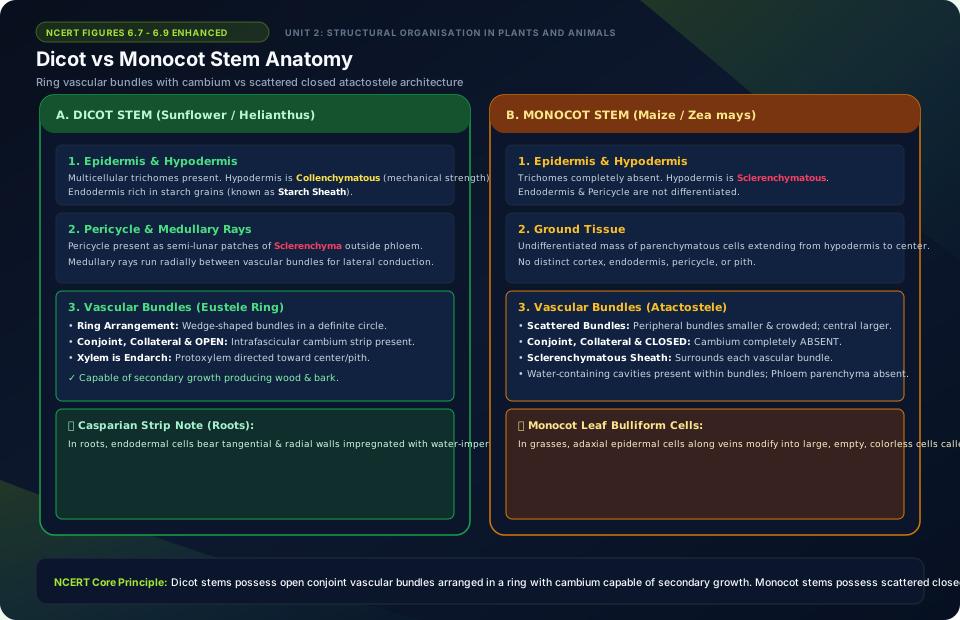
Picture This (Mental Hook): Think of Dicot as a luxury Open-air ring restaurant with a waiter named Cambium serving secondary growth! Monocots are closed-door scattered classrooms with no cambium and no secondary expansion!
📊 Visual Diagram & Mental Flow:
DICOT STEM (Open Ring):                  MONOCOT STEM (Scattered Closed):
      ┌───────────┐                            ┌───────────┐
      │  Phloem   │                            │  Phloem   │
      ├───────────┤                            ├───────────┤
      │  CAMBIUM  │ ◄── Secondary growth!     │  NO CAMBIUM│ ◄── Closed! No secondary growth
      ├───────────┤                            ├───────────┤
      │   Xylem   │                            │   Xylem   │ (Y/V-shaped with water cavity)
      └───────────┘                            └───────────┘
  * Arranged in a neat RING                 * SCATTERED throughout ground tissue
  * Endarch xylem (Protoxylem inward)       * Peripheral bundles are SMALLER
🔍 The Decoded Sequence:
D-O-C
Dicot Open Cambium
Dicot stem vascular bundles have intrafascicular cambium between xylem & phloem (capable of secondary growth)
M-C-S
Monocot Closed Scattered
Monocot stem bundles lack cambium (closed) and are scattered across ground tissue with sclerenchymatous bundle sheaths
Examiner Trap / Never Forget: In ALL stems, xylem is ENDARCH (protoxylem lies towards center/pith). In ALL roots, xylem is EXARCH (protoxylem lies towards periphery)!
“
LabRUM on the Roof (Upper), LabIUM at the Base (Lower)
Picture This (Mental Hook): When a pirate cockroach drinks Lab-RUM, it splashes on the upper roof (Labrum = Upper lip)! But when it cleans its Lab-IUM, it drips down to the bottom floor (Labium = Lower lip)!
📊 Visual Diagram & Mental Flow:
               [LABRUM] (Upper Lip - Roof)
               ┌───────┐
     [MANDIBLE]│   👅  │[MANDIBLE]   ◄── Grinding & Incising teeth
      (Left)   │HYPOPH.│   (Right)
               │       │
      [MAXILLA]│       │[MAXILLA]    ◄── Food holding & sensing
               └───────┘
               [LABIUM] (Lower Lip - Floor)
🔍 The Decoded Sequence:
Labrum
Roof
Upper lip (Lab-R-um = Roof)
Labium
Bottom
Lower lip (Lab-I-um = In floor / Lower)
Mandibles
Mastication
Paired chewing jaws with chitinous teeth
Maxillae
Manipulate
Paired appendages holding food particles
Hypopharynx
Tongue
Acts as the cockroach tongue inside cavity
Examiner Trap / Never Forget: Cockroach heart has 13 funnel-shaped chambers with ostia on either side. Female cockroach has 2 large ovaries made of 8 ovarian tubules (ovarioles) each!
“
M&M Nucleus Has DOUBLE, Non-Membrane Ribosomes & Centrioles Have ZERO
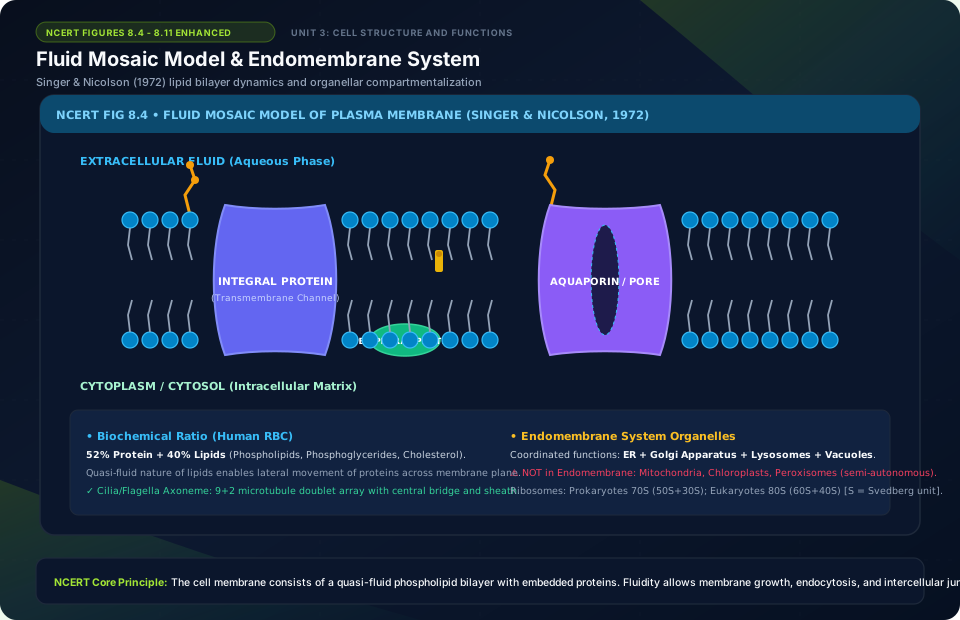
Picture This (Mental Hook): Picture a VIP nightclub called The Cell. Only Mitochondria, Plastids, and Nucleus get a DOUBLE VIP bulletproof jacket (Double Membrane). Ribosomes and Centrioles party naked with ZERO jackets!
📊 Visual Diagram & Mental Flow:
DOUBLE MEMBRANE BOUND (2 Lipid Bilayers):
  * [M]itochondria     (Endosymbiotic origin, 70S ribosomes, circular DNA)
  * [C]hloroplast/Plastids (Endosymbiotic, thylakoids, 70S ribosomes)
  * [N]ucleus          (Nuclear envelope with perinuclear space & pores)

ZERO MEMBRANE (Non-membrane bound):
  * Ribosomes          (Ribonucleoprotein particles: 70S prokaryote, 80S eukaryote)
  * Centrioles/Centrosome (9+0 triplet microtubule arrangement)
  * Nucleolus          (Site of active rRNA synthesis)

SINGLE MEMBRANE: All the rest (ER, Golgi, Lysosomes, Vacuoles = Endomembrane System)
🔍 The Decoded Sequence:
M-C-N
Double Jacket
Mitochondria, Chloroplast, Nucleus have TWO membranes
R-C-N
Zero Jacket
Ribosomes, Centrioles, Nucleolus have NO membrane enclosing them
GERL
Endomembrane
Golgi, ER, Endosomes, Lysosomes, Vacuoles coordinate functions as single membrane units
Examiner Trap / Never Forget: Peroxisomes, Mitochondria, and Chloroplasts are NOT part of the endomembrane system because their functions are not coordinated with ER/Golgi!
“
PVT TIM HALL & Over The Hill Live Independent Llamas (OTH LIL)
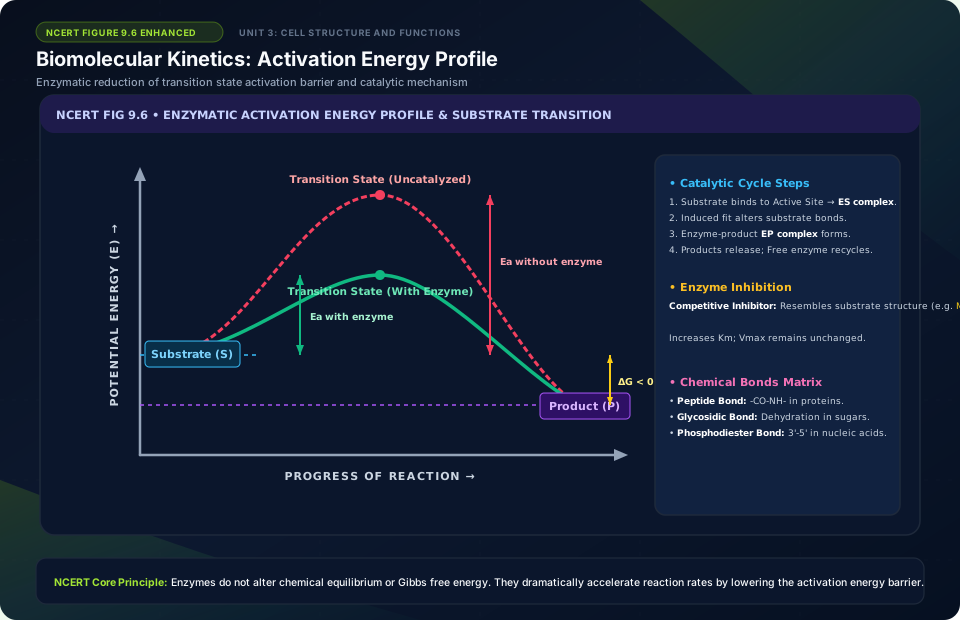
Picture This (Mental Hook): Private Tim Hall (PVT TIM HALL) guards the nutritional bunker where all 10 essential amino acids are kept! Outside his bunker Over The Hill Live Independent Llamas (OTH LIL) representing the 6 official IUBMB enzyme classes!
📊 Visual Diagram & Mental Flow:
10 ESSENTIAL AMINO ACIDS (Must be supplied in diet):
  [P]henylalanine  [V]aline      [T]hreonine
  [T]ryptophan    [I]soleucine  [M]ethionine
  [H]istidine     [A]rginine    [L]eucine     [L]ysine

6 ENZYME CLASSES (EC 1 to 6 - Strict IUBMB Sequence!):
  1. [O]xidoreductases / Dehydrogenases (Redox reactions)
  2. [T]ransferases                      (Transfer functional groups: e.g., kinase)
  3. [H]ydrolases                        (Cleave bonds by adding water)
  4. [L]yases                            (Cleave bonds without water / add to double bonds)
  5. [I]somerases                        (Interconversion of optical/positional isomers)
  6. [L]igases                           (Join two molecules using ATP hydrolysis)
🔍 The Decoded Sequence:
PVT TIM HALL
10 Amino Acids
Phe, Val, Thr, Trp, Ile, Met, His, Arg, Leu, Lys
O-T-H L-I-L
6 Enzyme Classes
EC 1: Oxidoreductase, EC 2: Transferase, EC 3: Hydrolase, EC 4: Lyase, EC 5: Isomerase, EC 6: Ligase
Examiner Trap / Never Forget: The enzyme classification numbers (EC 1 to 6) MUST be memorized in this exact sequence! A question asking for Class 4 is always LYASES, never Ligases (which is Class 6)!
“
Little Zara Plays Double Drums (LZPDD)
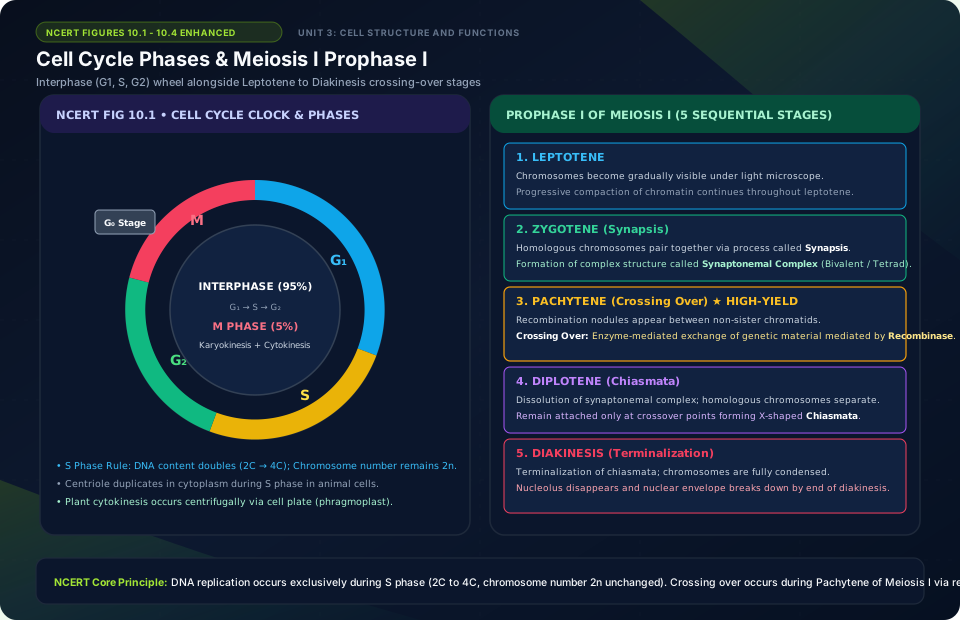
Picture This (Mental Hook): Little Zara Plays Double Drums at the cellular music festival! In Leptotene chromosomes bead up, in Zygotene homologous chromosomes hug with a synaptonemal zipper, in Pachytene they exchange drumsticks (Crossing Over), in Diplotene they pull apart forming X-shaped chiasmata, and in Diakinesis the terminal drums roll!
📊 Visual Diagram & Mental Flow:
[L]eptotene   ──► Chromatin condenses, bouquet stage, visible under light microscope
      ↓
[Z]ygotene    ──► Synapsis occurs; Synaptonemal Complex forms; Bivalent / Tetrad seen
      ↓
[P]achytene   ──► CROSSING OVER! Recombinase enzyme acts; non-sister chromatids recombine
      ↓
[D]iplotene   ──► Dissolution of synaptonemal complex; X-shaped CHIASMATA appear
      ↓           (Oocytes can arrest here for months/years = Dictyotene!)
[D]iakinesis  ──► Terminalisation of chiasmata; nuclear envelope breaks down; spindle forms
🔍 The Decoded Sequence:
L
Little
Leptotene (Condensation, thin thread stage)
Z
Zara
Zygotene (Synapsis of homologous pairs, synaptonemal complex)
P
Plays
Pachytene (Crossing over at recombination nodules mediated by recombinase)
D
Double
Diplotene (Chiasmata visible as homologous chromosomes repel except at crossovers)
D
Drums
Diakinesis (Terminalisation of chiasmata; transition to Metaphase-I)
Examiner Trap / Never Forget: Crossing over happens in PACHYTENE, but chiasmata become VISIBLE only in DIPLOTENE because the synaptonemal complex dissolves away!
“
PS-II Starts at 680, PS-I Strikes at 700 & Calvin Loves R-C-R

Picture This (Mental Hook): Think of Radio Station PS-II broadcasting at 680 kHz to split water bottles and release Oxygen! Then Radio Station PS-I at 700 kHz catches the energized electrons to make NADPH cash. Inside the stroma, Chef Calvin cooks sugar using R-C-R (RuBP Carboxylation, Reduction, Regeneration)!
📊 Visual Diagram & Mental Flow:
Z-SCHEME ELECTRON FLOW:
H2O ──► [PS-II: P680] ──► Pheophytin ──► Plastoquinone ──► Cytochrome b6f ──► Plastocyanin ──► [PS-I: P700] ──► Ferredoxin ──► NADPH
  (Water splitting on lumen side: 2H2O ──► 4H+ + O2 + 4e-)

CALVIN CYCLE (Dark Reaction in Stroma):
  1. [C]arboxylation : RuBP (5C) + CO2 ──(RuBisCO)──► 2x 3-PGA (3C) [Most crucial step!]
  2. [R]eduction     : 2 ATP + 2 NADPH per CO2 ──► Triose phosphate ──► Glucose
  3. [R]egeneration  : 1 ATP per CO2 consumed to regenerate RuBP acceptor
  * TOTAL FOR 1 GLUCOSE (6 CO2) = 18 ATP + 12 NADPH !
🔍 The Decoded Sequence:
P680 -> P700
Wavelengths
PS-II absorbs maximally at 680 nm; PS-I absorbs at 700 nm
C-R-R
Calvin Cycle
Step 1: Carboxylation (RuBisCO), Step 2: Reduction, Step 3: Regeneration of RuBP
18 & 12
Energy Budget
6 turns of Calvin cycle require 18 ATP and 12 NADPH to produce one 6-carbon Glucose molecule
Examiner Trap / Never Forget: Water splitting complex (OEC) is physically located on the INNER side (lumen) of the thylakoid membrane! Protons accumulate inside the lumen, creating a high proton gradient across the membrane.
“
Can I Keep Selling Substances For Money, Officer?
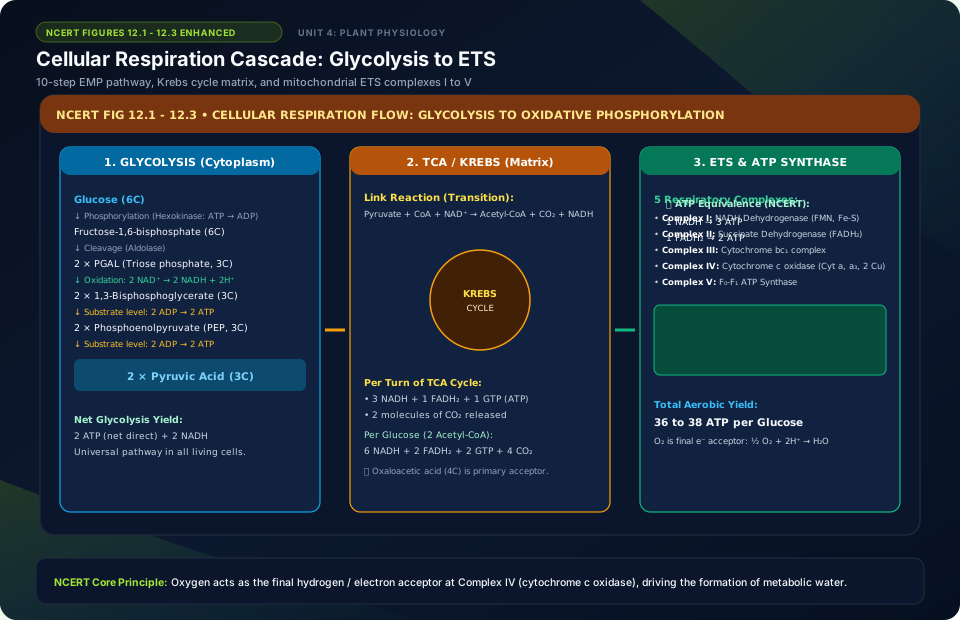
Picture This (Mental Hook): A shady biochemical dealer whispers in the mitochondria: 'Can I Keep Selling Substances For Money, Officer?' The mitochondrial police officer nods because energy currency (ATP/NADH) is being manufactured!
📊 Visual Diagram & Mental Flow:
Acetyl-CoA (2C) + Oxaloacetate (4C)
       ↓
┌──► [C]itrate (6C)                (Can)
│      ↓
│    [I]socitrate (6C)             (I)
│      ↓ ──► NADH + CO2
│    [K]etoglutarate (alpha, 5C)   (Keep)      ◄── ONLY 5-carbon intermediate!
│      ↓ ──► NADH + CO2
│    [S]uccinyl-CoA (4C)           (Selling)
│      ↓ ──► GTP / ATP (SLP!)
│    [S]uccinate (4C)              (Substances)
│      ↓ ──► FADH2 (Succinate dehydrogenase in inner membrane!)
│    [F]umarate (4C)               (For)
│      ↓
│    [M]alate (4C)                 (Money)
│      ↓ ──► NADH
└─── [O]xaloacetate (4C)           (Officer)   ◄── Regenerated acceptor
🔍 The Decoded Sequence:
C
Can
Citrate (6C)
I
I
Isocitrate (6C)
K
Keep
alpha-Ketoglutarate (5C - only 5C compound in TCA)
S
Selling
Succinyl-CoA (4C)
S
Substances
Succinate (4C - substrate level phosphorylation produces GTP)
F
For
Fumarate (4C - FADH2 produced by Complex II)
M
Money
Malate (4C)
O
Officer
Oxaloacetate (4C - regenerates to re-enter cycle)
Examiner Trap / Never Forget: Succinate dehydrogenase is the ONLY enzyme of the Krebs cycle that is NOT in the mitochondrial matrix—it is embedded in the INNER mitochondrial membrane (Complex II)!
“
Auxin Tops, Gibberellin Bolts, Cytokinin Divides, Ethylene Ripens, ABA Stresses
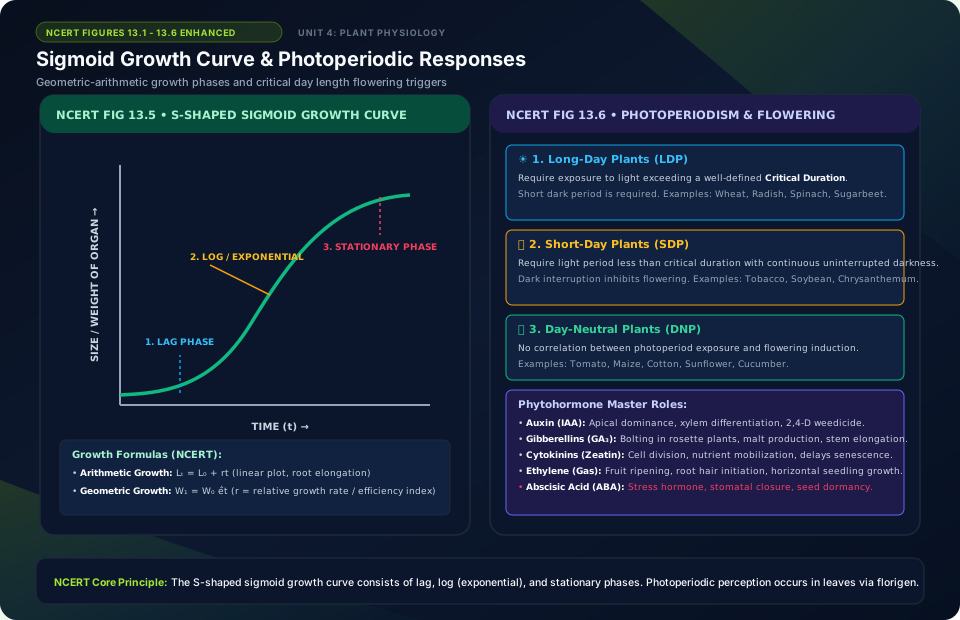
Picture This (Mental Hook): Auxin sits at the Top throne (Apical dominance). Gibberellin fires a Bolt of lightning extending dwarf cabbage stalks. Cytokinin Divides cells frantically keeping grandma leaves young. Ethylene the fruit seller Ripens bananas in a gas truck. And ABA the grumpy bouncer closes stomatal doors under Stress!
📊 Visual Diagram & Mental Flow:
┌──────────────┬────────────────────────┬──────────────────────────────────────────┐
│ Hormone      │ Discoverer / Source    │ Golden Landmark Physiological Function   │
├──────────────┼────────────────────────┼──────────────────────────────────────────┤
│ Auxin (IAA)  │ F.W. Went (Avena)      │ Apical Dominance, Root initiation in stem│
│              │                        │ 2,4-D used as selective weedicide!       │
│ Gibberellins │ E. Kurosawa (Bakanae)  │ Bolting (internode elongation), Malting  │
│ Cytokinins   │ Skoog & Miller (Kinetin│ Delay leaf senescence (Richmond-Lang),   │
│              │                        │ Promotes lateral bud growth & division   │
│ Ethylene     │ Cousins (Oranges)      │ ONLY GASEOUS HORMONE! Climacteric fruit  │
│              │                        │ ripening, breaking seed dormancy         │
│ Abscisic Acid│ Addicott & Wareing     │ STRESS HORMONE: Rapid stomatal closure,  │
│ (ABA)        │                        │ Seed dormancy, Antagonist to Gibberellins│
└──────────────┴────────────────────────┴──────────────────────────────────────────┘
🔍 The Decoded Sequence:
Auxin
Apex
Apical dominance (removes apical bud -> promotes bushy lateral branches)
GA
Bolting
Internode elongation just prior to flowering in rosette plants (cabbage, beet)
CK
Cytokinesis
Promotes active cell division; antagonist to auxin apical dominance
C2H4
Gas Ripening
Gaseous phytohormone triggering respiratory climacteric burst in ripening fruits
ABA
Anti-GA
Stress hormone causing stomatal closure during drought; maintains seed dormancy
Examiner Trap / Never Forget: ABA and Gibberellins are direct ANTAGONISTS regarding seed germination (GA breaks dormancy and triggers alpha-amylase; ABA enforces dormancy)!
“
CADET, Face RIGHT! (Unload Oxygen to Working Muscles)

Picture This (Mental Hook): A drill sergeant screams at the military camp: 'CADET, Face RIGHT!' When soldier tissues work out hard, they get hot, acidic, and full of CO2, forcing Hemoglobin to face right and dump oxygen right into the thirsty muscle fibers!
📊 Visual Diagram & Mental Flow:
O2 Saturation (%)
 100 ┌───────-───---
     │          /  /   ◄── LEFT SHIFT (High affinity: Lungs: Low CO2, High pH, Cool temp)
  50 │ - - - - / -/ - - P50
     │        /  /
     │       /  /  ◄── RIGHT SHIFT (Low affinity / Bohr Effect: Tissues)
     └──────/──/────────► pO2 (mmHg)

WHAT SHIFTS CURVE TO THE RIGHT (CADET Face Right):
  [C] : CO2 increase (High pCO2)
  [A] : Acidity increase (Low pH / High [H+])
  [D] : 2,3-DPG (Diphosphoglycerate) increase
  [E] : Exercise
  [T] : Temperature increase
🔍 The Decoded Sequence:
C
CO2
Elevated pCO2 lowers hemoglobin affinity (Bohr effect)
A
Acidity
Lower pH / higher H+ concentration shifts curve right
D
DPG
2,3-Diphosphoglycerate binds deoxygenated beta chains
E
Exercise
Muscular contraction produces lactic acid and heat
T
Temperature
Fever or exercising tissues increase oxygen unloading
Examiner Trap / Never Forget: A right shift means DECREASED affinity of hemoglobin for O2 (P50 increases). This facilitates oxygen delivery to actively respiring tissues in capillaries!
“
Never Let Monkeys Eat Bananas & LAB RAT
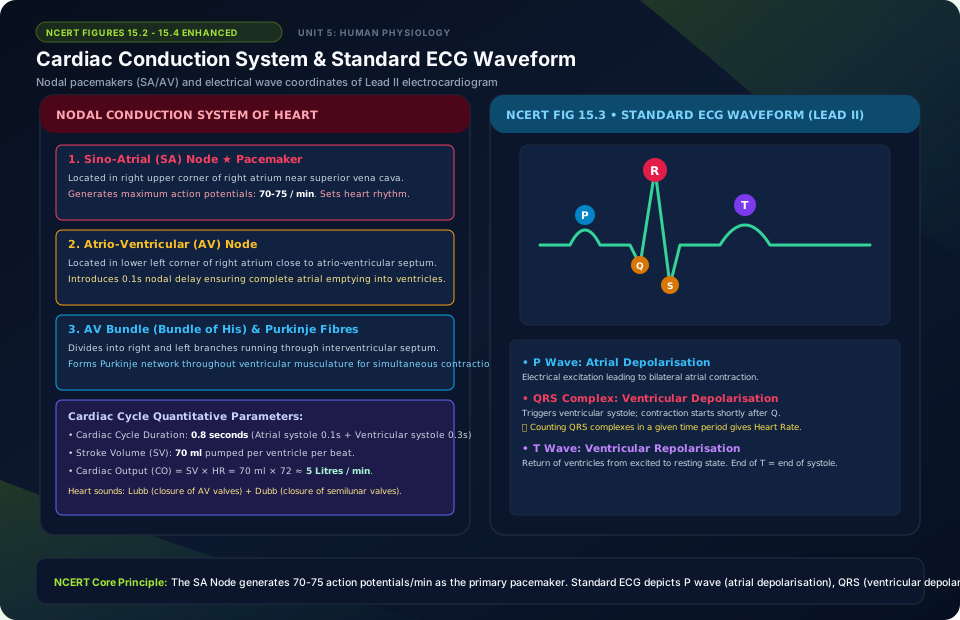
Picture This (Mental Hook): A zoo keeper gives a stern warning: 'Never Let Monkeys Eat Bananas!' In the cardiology clinic next door, scientists experiment on a LAB RAT to check the heart valves!
📊 Visual Diagram & Mental Flow:
WBC DIFFERENTIAL COUNT (Most to Least Abundant):
  [N]eutrophils (60-65%) ──► [L]ymphocytes (20-25%) ──► [M]onocytes (6-8%) ──► [E]osinophils (2-3%) ──► [B]asophils (0.5-1%)

HEART ATRIOVENTRICULAR VALVES (LAB RAT):
        RIGHT ATRIUM                     LEFT ATRIUM
             │                                │
       [TRICUSPID VALVE]               [BICUSPID / MITRAL VALVE]
       (Right Atrium - RAT)            (Left Atrium - LAB)
             ↓                                ↓
       RIGHT VENTRICLE                  LEFT VENTRICLE
🔍 The Decoded Sequence:
N-L-M-E-B
Never Let Monkeys Eat Bananas
Neutrophils (65%), Lymphocytes (25%), Monocytes (6%), Eosinophils (2.5%), Basophils (0.5%)
LAB
Left Atrium Bicuspid
Left AV valve is Bicuspid (Mitral) valve
RAT
Right Atrium Tricuspid
Right AV valve has 3 cusps (Tricuspid valve)
Examiner Trap / Never Forget: Basophils are the LEAST abundant leukocytes (0.5–1%), but secrete crucial inflammatory mediators: Histamine, Serotonin, and Heparin!
“
Renin Activates Angiotensin, Aldosterone Absorbs Sodium
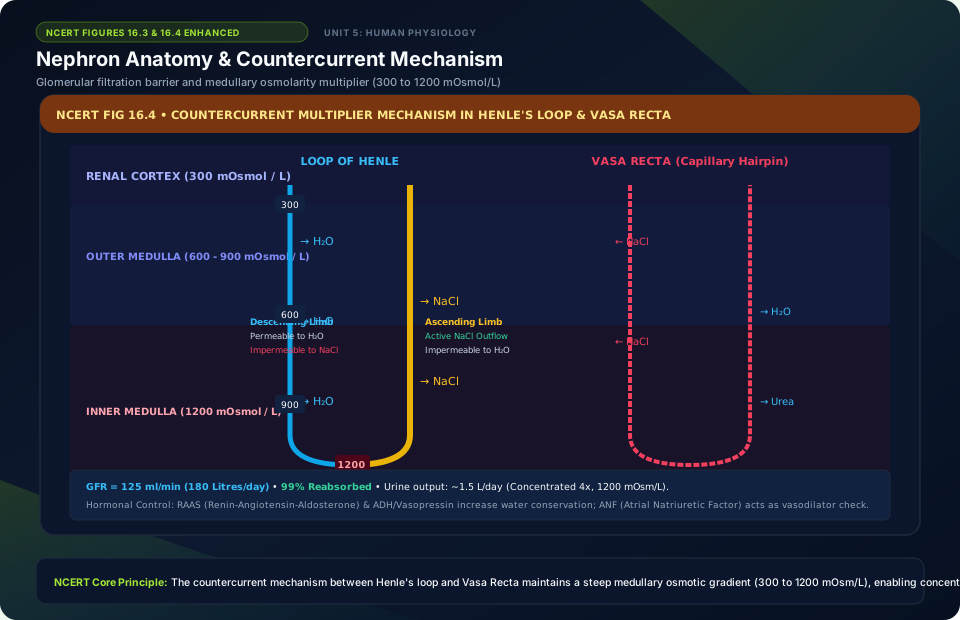
Picture This (Mental Hook): When blood pressure drops, the kidney's JG cells sound the alarm by firing bullet Renin into the bloodstream. Renin converts peaceful Angiotensinogen into warrior Angiotensin-II, who commands Adrenal cortex: 'Absorb Sodium and Water immediately!'
📊 Visual Diagram & Mental Flow:
Blood Pressure Drops / GFR Falls / Low Na+ in Filtrate
                   ↓
  [JG Cells of Kidney] secrete RENIN (Enzyme)
                   ↓
  Angiotensinogen (from Liver) ──(Renin)──► Angiotensin I
                                                ↓
                                    ACE (Lungs) │
                                                ▼
                                          ANGIOTENSIN II (Potent Vasoconstrictor!)
                                         ┌──────┴───────────────────┐
                                         ▼                          ▼
                                Arteriolar Constriction     [Adrenal Cortex]
                                  (Increases GFR/BP)                │
                                                                    ▼
                                                                ALDOSTERONE
                                                                    │
                                                            DCT & Collecting Duct
                                                            Absorbs Na+ & H2O
                                                            Excretes K+ & H+
🔍 The Decoded Sequence:
Renin
Kidney JG
Juxtaglomerular cells sense drop in renal blood flow and secrete Renin
Angiotensin II
Vasoconstriction
Constricts efferent arterioles and stimulates aldosterone secretion
Aldosterone
Adrenal Cortex
Steroid hormone that increases Na+ reabsorption and water retention in DCT
ANF
Antagonist
Atrial Natriuretic Factor from heart walls opposes RAAS, causing vasodilation & Na+ excretion
Examiner Trap / Never Forget: Renin is an enzyme secreted by kidney JG cells with ONE 'n' (R-E-N-I-N). Do not confuse it with Rennin (with two 'n's: R-E-N-N-I-N), which is the milk-curdling gastric enzyme in infant calves!
“
PEST OF 6 Cranial Bones & HIZ-SAM Keeps The A-Band Constant
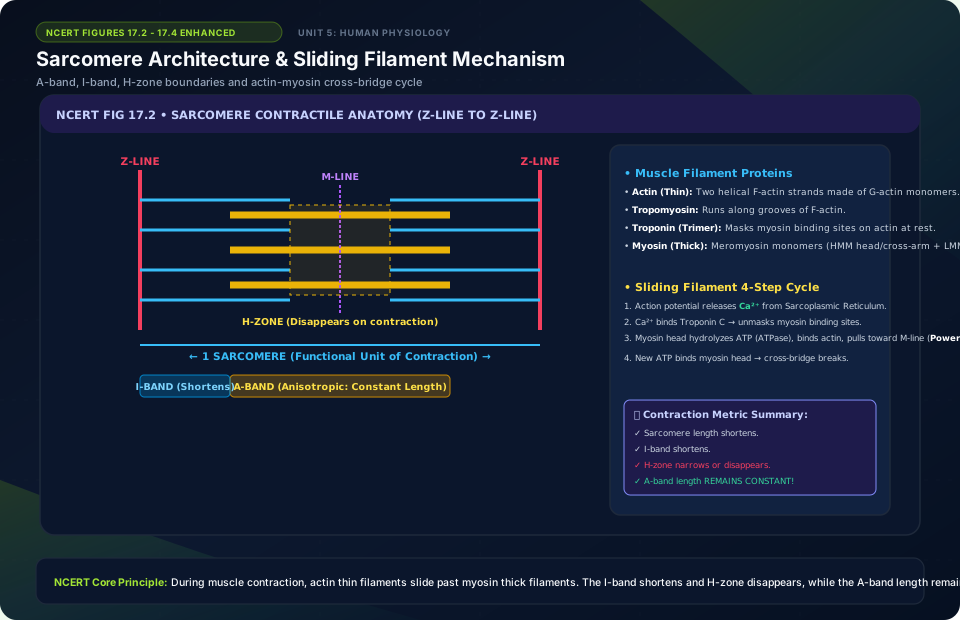
Picture This (Mental Hook): Think of an annoying PEST OF 6 bugs flying around your skull! When muscle contracts, H-zone and I-band Zoom away (shrink), but SAM shouts: 'The A-band stays Constant forever!'
📊 Visual Diagram & Mental Flow:
8 CRANIAL BONES (PEST OF 6):
  [P]arietal (2)  [E]thmoid (1)  [S]phenoid (1)  [T]emporal (2)  [O]ccipital (1)  [F]rontal (1)

SARCOMERE BANDS DURING CONTRACTION:
      Z-Line                         M-Line                         Z-Line
        │       ┌──────────────┐       │       ┌──────────────┐       │
        ├───────│  A-BAND      │───────┼───────│  A-BAND      │───────┤
        │       │  (Myosin)    │       │       │  (Myosin)    │       │
        │◄─I-─► │              │ ◄───H-Zone──► │              │ ◄─I-─►│
        │(Actin)│              │  (Myosin only)│              │(Actin)│

  * DURING CONTRACTION: Sarcomere shortens! I-Band shortens! H-Zone disappears!
  * A-BAND LENGTH NEVER CHANGES (Length of thick myosin filaments is constant)!
🔍 The Decoded Sequence:
P-E-S-T-O-F
Cranial Bones
Parietal (2), Ethmoid (1), Sphenoid (1), Temporal (2), Occipital (1), Frontal (1) = 8 bones total
H-I-Z
Shortens
H-zone narrows, I-band shrinks, Z-lines move closer together
A-Band
Constant
A-band (Anisotropic dark band) NEVER changes length during contraction
Examiner Trap / Never Forget: Sphenoid bone is a single butterfly-shaped bone at the base of skull that articulates with all other cranial bones and contains the Sella Turcica housing the pituitary gland!
“
Some Say Marry Money, But My Brother Says Big Brains Matter More
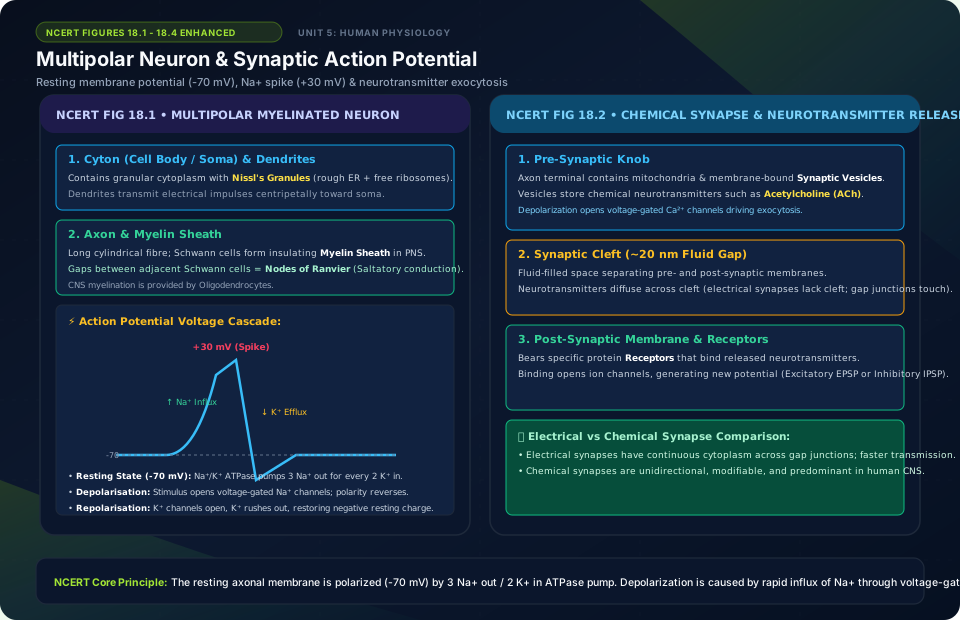
Picture This (Mental Hook): A college student debates romance: 'Some Say Marry Money, But My Brother Says Big Brains Matter More!' This gives the exact sensory (S), motor (M), or both (B) nature of all 12 cranial nerves!
📊 Visual Diagram & Mental Flow:
CRANIAL NERVES (I to XII) NATURE:
  I.   Olfactory    : [S]ome     (Sensory - Smell)
  II.  Optic        : [S]ay      (Sensory - Vision)
  III. Oculomotor   : [M]arry    (Motor - Eye movement)
  IV.  Trochlear    : [M]oney    (Motor - Superior oblique eye muscle, smallest)
  V.   Trigeminal   : [B]ut      (Both - Sensory face / Motor chewing, largest)
  VI.  Abducens     : [M]y       (Motor - Lateral rectus eye muscle)
  VII. Facial       : [B]rother  (Both - Facial expression / Taste 2/3 tongue)
  VIII.Vestibulococh: [S]ays     (Sensory - Hearing & Balance)
  IX.  Glossopharyng: [B]ig      (Both - Taste post 1/3 / Swallowing)
  X.   Vagus        : [B]rains   (Both - Parasympathetic viscera, longest)
  XI.  Accessory    : [M]atter   (Motor - Trapezius / Sternocleidomastoid)
  XII. Hypoglossal  : [M]ore     (Motor - Tongue movements)

ACTION POTENTIAL: Na+ INFLUX = Depolarization (+30 mV) │ K+ EFFLUX = Repolarization (-70 mV)
🔍 The Decoded Sequence:
S
Sensory
Nerves I, II, VIII are pure Sensory
M
Motor
Nerves III, IV, VI, XI, XII are pure Motor
B
Both
Nerves V, VII, IX, X are Mixed (Sensory + Motor)
Examiner Trap / Never Forget: Vagus nerve (CN X) is the longest cranial nerve and the primary provider of parasympathetic input to thoracic and abdominal viscera (slows heart rate, stimulates digestion)!
“
FLAT PIG & GFR Makes Salt, Sugar, Sex
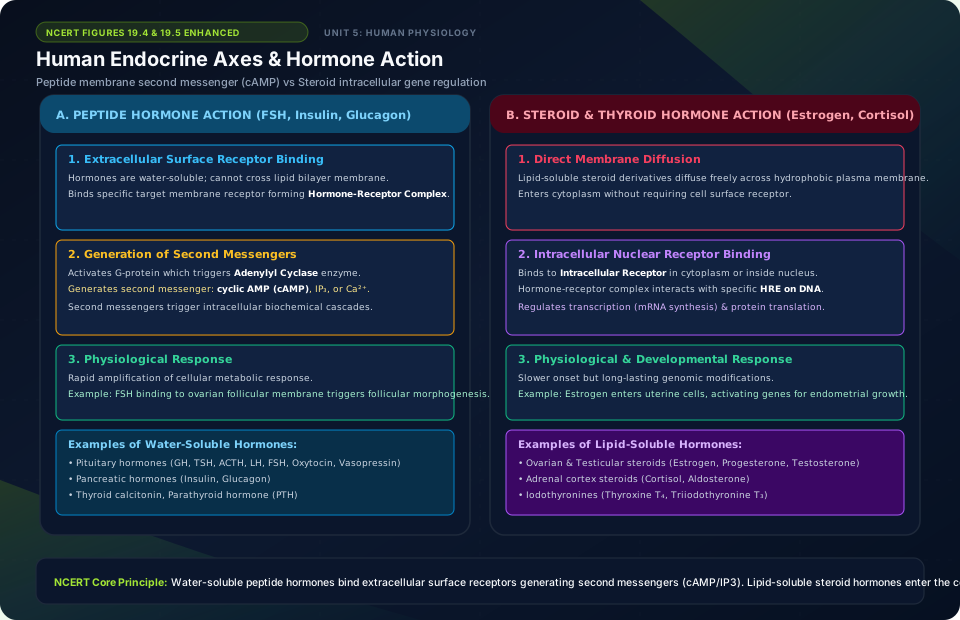
Picture This (Mental Hook): Imagine a cartoon farm where a FLAT PIG flies out of the Anterior Pituitary! Down on the adrenal gland, the kidney's GFR filter reminds you of the 3 cortex layers from outside to inside: Glomerulosa, Fasciculata, Reticularis that produce Salt (Mineralocorticoids), Sugar (Glucocorticoids), and Sex steroids!
📊 Visual Diagram & Mental Flow:
ANTERIOR PITUITARY (Adenohypophysis - FLAT PIG):
  [F]SH        : Follicle Stimulating Hormone
  [L]H         : Luteinizing Hormone
  [A]CTH       : Adrenocorticotropic Hormone
  [T]SH        : Thyroid Stimulating Hormone
  [P]rolactin  : Milk synthesis
  [I]gnore     : (Intermediate lobe makes MSH!)
  [G]H         : Growth Hormone (Somatotropin)

ADRENAL CORTEX LAYERS (Outside ──► Inside):
  Capsule ──► [G]lomerulosa  ──► Mineralocorticoids (Aldosterone)  ──► SALT
          ──► [F]asciculata   ──► Glucocorticoids (Cortisol)        ──► SUGAR
          ──► [R]eticularis   ──► Androgenic steroids (DHEA)       ──► SEX
          ──► Medulla         ──► Catecholamines (Epi/Norepi)       ──► FIGHT / FLIGHT
🔍 The Decoded Sequence:
FLAT PIG
Anterior Pituitary
FSH, LH, ACTH, TSH, Prolactin, GH (MSH is intermediate lobe; Oxytocin and ADH/Vasopressin are posterior lobe)
G-F-R
Adrenal Cortex
Zona Glomerulosa (outer), Zona Fasciculata (middle, widest), Zona Reticularis (inner)
Salt-Sugar-Sex
Hormones
Glomerulosa = Aldosterone (Salt); Fasciculata = Cortisol (Sugar); Reticularis = Androgens (Sex)
Examiner Trap / Never Forget: Posterior pituitary does NOT synthesize hormones! Oxytocin and Vasopressin (ADH) are synthesized in the HYPOTHALAMUS (paraventricular and supraoptic nuclei) and merely stored and released by the neurohypophysis!