
3.1 Classification Systems: Artificial, Natural (Bentham & Hooker) & Phylogenetic #
Understanding plant evolution requires examining historical classification systems. Early systems, such as that of Carolus Linnaeus, were Artificial Systems based merely on superficial vegetative characters or stamen number (androecium structure). They gave equal weight to vegetative and sexual characteristics, which was flawed because vegetative traits are easily altered by environmental influences.
To overcome this, Natural Classification Systems were introduced, most famously by George Bentham and Joseph Dalton Hooker. Natural systems consider not just external morphology, but internal anatomical features, ultra-structure, embryology, and phytochemistry.
Modern plant taxonomy relies on Phylogenetic Classification Systems, which assume that organisms belonging to the same taxa share a common ancestor. When fossil evidence is missing, taxonomists deploy modern analytical tools:
- Numerical Taxonomy: Evaluates hundreds of observable characters using computers by assigning numerical codes, giving each character equal weightage.
- Cytotaxonomy: Utilizes cytological details such as chromosome number, chromosome morphology, and meiotic behavior.
- Chemotaxonomy: Relies on the chemical constituents (secondary metabolites, proteins, nucleic acids) of plants to resolve evolutionary dilemmas.
3.2 Algae: Chlorophyceae (Green), Phaeophyceae (Brown) & Rhodophyceae (Red) #
Algae are simple, thalloid, autotrophic, chlorophyll-bearing aquatic (freshwater and marine) organisms. They reproduce vegetatively by fragmentation, asexually by motile flagellated zoospores, and sexually by isogamous, anisogamous, or oogamous gametic fusion. NCERT divides algae into three major classes based on pigment composition and stored food:
| Class of Algae | Major Pigments & Food Reserve | Cell Wall & Flagella | NCERT Representative Examples |
|---|---|---|---|
| Chlorophyceae (Green Algae) | Chlorophyll a and b. Stored food: Starch located in cellular organelles called pyrenoids. | Cellulose inner layer + pectose outer layer. 2–8 equal, apical flagella. | Chlamydomonas, Volvox (colonial), Ulothrix, Spirogyra, Chara. |
| Phaeophyceae (Brown Algae) | Chlorophyll a, c, and brown xanthophyll fucoxanthin. Stored food: Complex carbohydrates (Laminarin and Mannitol). | Cellulose covered by gelatinous coating of algin. 2 unequal, laterally attached flagella. | Ectocarpus, Dictyota, Laminaria, Sargassum, and giant kelps (Fucus). |
| Rhodophyceae (Red Algae) | Chlorophyll a, d, and red proteinaceous pigment r-phycoerythrin. Stored food: Floridean starch (structurally similar to amylopectin and glycogen). | Cellulose, pectin, and polysulphate esters. Flagella completely absent in all life stages. | Polysiphonia, Porphyra, Gracilaria, and Gelidium (source of agar). |
3.3 Bryophytes (Amphibians of Plant World): Liverworts & Mosses #
Bryophytes are known as the amphibians of the plant kingdom because although they live in soil on damp land, they are strictly dependent on external water for sexual reproduction (transfer of flagellated antherozoids to the archegonium).
Unlike vascular plants, the dominant, independent plant body of a bryophyte is a haploid gametophyte, which produces gametes. It lacks true roots, stems, or leaves, possessing root-like multicellular or unicellular rhizoids. The multicellular sex organs are jacketed: the male sex organ is the antheridium (producing biflagellate antherozoids), and the female flask-shaped organ is the archegonium (producing a single egg).
Fertilization produces a diploid zygote that does not undergo immediate reduction division. Instead, it develops into a multicellular, diploid sporophyte that remains physically attached to and nutritionally dependent on the photosynthetic gametophyte. Cells of the capsule undergo meiosis to produce haploid spores that germinate into new gametophytes.
- Liverworts (e.g., Marchantia): Thalloid plant body with dorsiventral flattening closely appressed to the substrate. Asexual reproduction occurs by fragmentation or through specialized green, multicellular asexual buds called gemmae, which develop in small receptacles called gemma cups on the thallus.
- Mosses (e.g., Funaria, Polytrichum, Sphagnum): The gametophyte has two distinct stages: the juvenile creeping, green, branched filamentous protonema stage developing directly from a spore, and the erect, leafy gametophore stage bearing spirally arranged leaves. Sphagnum (peat moss) provides peat long used as fuel and has immense water-holding capacity, making it invaluable as packing material for trans-shipment of living plants.
3.4 Pteridophytes (First Vascular Land Plants): Ferns, Horsetails & Heterospory #
Pteridophytes (ferns and horsetails) hold an evolutionary milestone: they are the first terrestrial plants to possess vascular tissues—xylem (for water conduction) and phloem (for nutrient transport). In pteridophytes, xylem lacks true vessels, and phloem lacks companion cells.
In stark contrast to bryophytes, the dominant independent plant body in pteridophytes is a diploid sporophyte, which is differentiated into true roots, stem, and leaves. Leaves may be small microphylls (as in Selaginella) or large macrophylls (as in ferns). Sporophytes bear sporangia subtended by leaf-like appendages called sporophylls, which in some forms form compact structures called strobili or cones (e.g., Equisetum, Selaginella).
The sporangia produce haploid spores by meiosis. Upon germination, these spores give rise to an inconspicuous, small, multicellular, free-living, mostly photosynthetic thalloid gametophyte called the prothallus. The prothallus requires cool, damp, shaded environments to survive, which severely limits the ecological distribution of pteridophytes.
3.5 Gymnosperms (Naked Seeds) & Angiosperms (Flowering Seed Plants) #
Gymnosperms (meaning ‘naked seeds’: gymnos = naked, sperma = seed) are seed-bearing vascular plants in which the ovules are not enclosed by an ovary wall and remain exposed both before and after fertilization. Consequently, seeds that develop post-fertilization are not covered (they never form fruits).
Gymnosperms include medium-sized trees, tall shrubs, and giant trees like the giant redwood Sequoia (one of the tallest tree species on Earth). Their roots are generally tap roots, frequently forming symbiotic associations: fungal mycorrhizae in Pinus roots, and specialized nitrogen-fixing coralloid roots in Cycas harboring cyanobacteria (Anabaena).
Gymnosperms are heterosporous: they produce microspores in microsporangia on male strobili (pollen cones), and megaspores in megasporangia on female strobili (seed cones). The microspore develops into a highly reduced pollen grain (e.g., winged pollen in Pinus). Pollination is strictly by wind (anemophily), and pollen tubes deliver male gametes directly to the archegonia in the ovule.
Angiosperms (flowering plants) represent the pinnacle of plant diversification. In angiosperms, pollen grains and ovules develop in specialized reproductive organs called flowers, and seeds are enclosed inside fruits. Angiosperms undergo a unique biological event called double fertilization (syngamy yielding a 2n zygote, and triple fusion yielding a 3n Primary Endosperm Nucleus).
3.6 Plant Life Cycles: Haplontic, Diplontic & Haplodiplontic Alternation of Generations #
During the life history of sexually reproducing plants, there is an orderly alternation between the haploid gamete-producing gametophyte (n) and the diploid spore-producing sporophyte (2n). This phenomenon is termed alternation of generations. NCERT classifies plant life cycles into three fundamental patterns:
- Haplontic Life Cycle: The sporophytic generation is represented only by the single-celled diploid zygote. There are no free-living sporophytes. Meiosis occurs immediately in the zygote to produce haploid spores, which divide mitotically to form the dominant, free-living photosynthetic gametophyte. Most green algae (e.g., Volvox, Spirogyra, and species of Chlamydomonas) follow this cycle.
- Diplontic Life Cycle: The diploid sporophyte is the dominant, photosynthetic, vascular, independent phase. The gametophytic phase is represented only by the single to few-celled haploid gametes or pollen/embryo sac. All seed-bearing plants (Gymnosperms and Angiosperms) follow a diplontic life cycle, along with the brown alga Fucus.
- Haplodiplontic Life Cycle: An intermediate condition where both the haploid gametophyte and diploid sporophyte are multicellular and physically prominent phases.
- In Bryophytes, the dominant phase is the free-living haploid gametophyte, alternating with a short-lived multicellular sporophyte that is dependent on the gametophyte.
- In Pteridophytes, the dominant phase is the independent, vascular diploid sporophyte, alternating with a small, independent haploid prothallus gametophyte.
- Algal exceptions: While most algae are haplontic, Ectocarpus, Polysiphonia, and kelps are haplodiplontic.
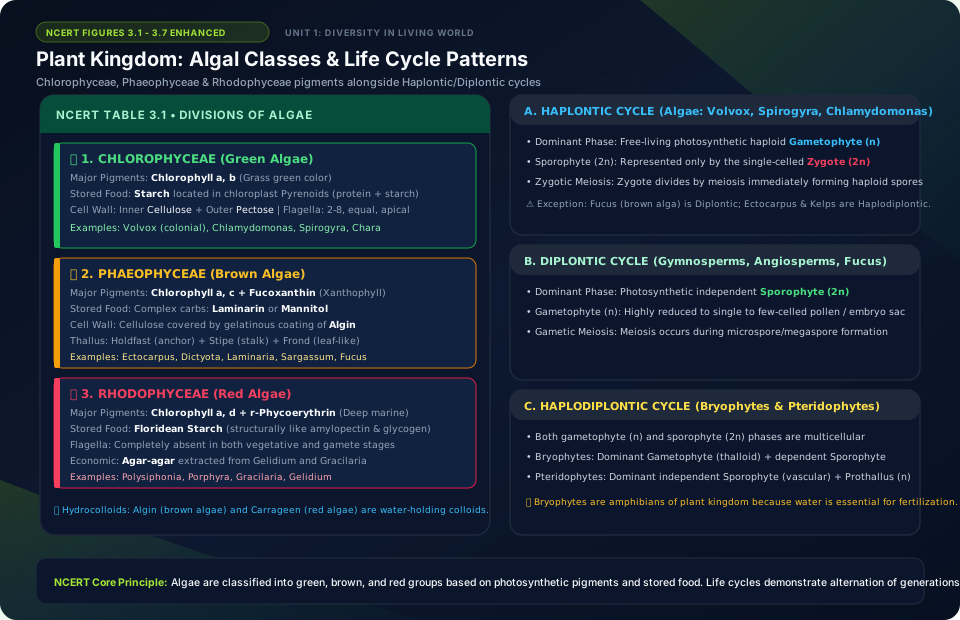
Plant Kingdom: Algal Classes & Life Cycle Patterns
🚨 Examiner Traps & Common Misconceptions
✅ Reality: Bryophytes lack true roots, stems, or leaves! They have root-like rhizoids. Their main dominant plant body is a haploid gametophyte, unlike vascular plants where the sporophyte dominates.
✅ Reality: Gymnosperm means ‘naked seed’ (gymnos = naked, sperma = seed). Ovules are not enclosed by an ovary wall, so they never form fruits.
💡 Memory Hack & Mnemonic
Brown Algae Pigments & Storage: ‘Brown Bears Love Frying’ (Brown = Phaeophyceae, Fucoxanthin pigment, Laminarin and Mannitol storage).
⭐ 10/10 Active Recall Self-Check: Chapter 3
Test your mastery before closing this lecture note. Can you answer these without looking back?
- What are the primary diagnostic characteristics that define Plant Kingdom in the NCERT syllabus?
- How do the physiological or anatomical structures covered in this chapter adapt the organism to its environment?
- What are the most common trick questions examiners create based on the exceptions in this chapter?
- Can you state the core mnemonic formula for remembering the sequential stages or components described above?
⭐ 10/10 Active Recall Self-Check: Chapter 3
Test your mastery before closing this lecture note. Can you answer these without looking back?
- What are the primary diagnostic characteristics that define Plant Kingdom in the NCERT syllabus?
- How do the physiological or anatomical structures covered in this chapter adapt the organism to its environment?
- What are the most common trick questions examiners create based on the exceptions in this chapter?
- Can you state the core mnemonic formula for remembering the sequential stages or components described above?