8.1 The seed and dormancy #
8.1.1 Embryo, endosperm, coat, and the two kinds of block #
A seed contains an embryo, a store, and a coat. The embryo is an axis plus one cotyledon or two. In grasses the cotyledon is the scutellum, against the endosperm. The endosperm is the storage tissue whose origin at double fertilisation belongs to Plant Biology. In cereals most of it is dead starch and the outer aleurone is alive. In pea and bean the endosperm is used up and the cotyledons store the reserves. The testa is generally dead. A cereal grain is a caryopsis, fruit wall fused to the seed coat.
A mature orthodox seed is dry, often near 5–10% water and usually under about 15%. LEA proteins and oligosaccharides stabilise a glassy cytoplasm. Germination ends when the radicle emerges. Water uptake has three phases. Phase I is physical imbibition, driven by a very negative matric potential, and a dead seed does it too. Phase II is metabolic reactivation. A dormant imbibed seed can sit there. Phase III is radicle growth. A non-dormant seed needs water, oxygen, and a suitable temperature. Light promotes, inhibits, or is irrelevant, depending on the species. Lettuce needs the phytochrome trigger of Chapter 6.
Quiescence ends as soon as water, oxygen, and temperature permit germination. Dormancy remains even then. Primary dormancy is set on the mother plant. Secondary dormancy can be imposed later on an imbibed seed. Coat-imposed dormancy is cured by removing the covering: hard legume coats block water until scarified, and other coats limit oxygen, restrain the radicle, or hold inhibitors. Embryo dormancy remains in a naked embryo until after-ripening, cold, light, or a hormonal change. Apple is a classical cold-requiring case. An embryo still immature at shedding is a third situation, not one of those two.
8.1.2 ABA against gibberellin #
During development, ABA drives storage, LEA accumulation, desiccation tolerance, and primary dormancy, and it prevents vivipary. Maize viviparous mutants and ABA-deficient Arabidopsis show the failure. Germination requires the balance to tip. ABA falls or sensitivity falls, gibberellin rises, GA3-oxidase is induced, and CYP707A hydroxylases catabolise ABA. Light, through phytochrome, and cold both shift that metabolism in seeds that use those cues. Ratio and sensitivity matter. A single threshold concentration does not.
Gibberellin acts by the GID1 and DELLA route of Chapter 5. In the embryo it raises the growth potential of the radicle so the radicle can push through the coat. In the aleurone it induces hydrolases. ABA, through ABI3, ABI4, and ABI5, maintains maturation and blocks germination after imbibition. A dormant seed is neither dead nor merely dry. If it has imbibed, it is metabolically awake and stopped.
8.2 Reserves and the end of a leaf #
8.2.1 Aleurone, gibberellin, and α-amylase #
Barley is the classical grain. The starchy endosperm is dead and cannot respond to a hormone. The embryo, once imbibed and not dormant, releases gibberellin. Aleurone cells secrete α-amylase, proteases, and β-glucanases. The β-glucan walls have to be opened before starch is accessible. α-Amylase attacks the grains, β-amylase already in the endosperm continues the breakdown, and the scutellum absorbs the sugars. Proteases free amino acids from the matrix around the starch.
The classical result replaces the embryo with the hormone. An embryoless half-grain makes little α-amylase. Gibberellin restores synthesis and secretion. ABA supplied with the gibberellin blocks the response. The receptor path is DELLA degradation, as in a stem. The barley DELLA is SLN1. Once it is gone, GAMYB accumulates and induces α-amylase genes. The same removal of a repressor empties a grain and elongates an internode. The genes that follow are the tissue’s own.
8.2.2 Senescence is not necrosis #
Senescence is an ordered dismantling. Chlorophyll, protein, and membranes are broken down while the cell stays coordinated, and mobile nutrients leave in the phloem. Rubisco is a large nitrogen store. Chlorophyll breakdown holds the phototoxic intermediates, so a yellowing leaf is safer in the light than a leaf killed at once. In a cereal, leaf senescence and grain filling are one process. Ethylene promotes senescence, and ein2 mutants stay green longer. Cytokinin delays it. ABA and jasmonate promote it under stress. A stay-green mutation that only blocks chlorophyll loss does not help if nitrogen cannot leave.
Abscission is a further ethylene response once auxin from the leaf has fallen. A tree can drop its leaves and keep its meristems. An annual senesces the shoot after reproduction. Necrosis is unscheduled death after acute injury, intracellular ice, a toxin, or a crush. Membranes fail early, contents leak, and salvage is poor. Plants do not run animal apoptosis. There are no caspases. Metacaspases and a vacuole-centred collapse occur in xylem formation, in some hypersensitive cell death, and in lysigenous aerenchyma. Leaf senescence meets that kind of death only at the end.
| Senescence | Necrosis | |
|---|---|---|
| Trigger | Development, or a regulated stress response | Acute injury |
| Order | Export first; the cell stays organised | Membranes fail early |
| Nutrients | Loaded into the phloem | Left behind or leaked |
| Hormones | Ethylene, ABA, and jasmonate promote; cytokinin delays | Not a hormone programme |
8.3 Key terms, summary, and self-check #
Key terms. Scutellum; aleurone; quiescence; coat-imposed dormancy; embryo dormancy; vivipary; α-amylase; GAMYB; senescence; necrosis.
Summary. A seed is an embryo, a store in endosperm or cotyledons, and a coat. Quiescent seeds germinate when water, oxygen, and temperature allow. Dormant seeds do not, until a coat block or an embryo block is removed. ABA imposes dormancy. Gibberellin removes DELLA repressors, drives the radicle, and in barley induces aleurone α-amylase, which the dead endosperm cannot make. Senescence is the ordered salvage of nutrients, promoted by ethylene and delayed by cytokinin, and it is not necrosis.
Self-check.
1. Which part of a mature cereal grain secretes α-amylase, and which part stores the starch but cannot respond to gibberellin?
2. Why is a dry seed that germinates as soon as it is watered called quiescent rather than dormant?
3. What does an embryoless barley half-grain do when given gibberellin, and what does ABA do to that response?
4. Why can a yellowing leaf still export nitrogen, while a necrotic leaf cannot?
5. Name two hormones that promote leaf senescence and one that delays it.
—
# Closing: how the chapters fit together
Water potential runs from the transpiring leaf through the xylem into drought, salt, and the imbibition of a seed. The H+ pump and its symporters reappear in mineral uptake, sucrose loading, auxin retention, guard-cell opening, and Na+ exclusion. Photosynthesis makes the sucrose that pressure flow delivers, and it fails under stress as shut stomata, more photorespiration, an over-reduced chain, and a heat-sensitive PSII. ABA closes stomata, holds dormancy, and induces LEA genes. Gibberellin removes DELLA in a stem and in an aleurone. The ethylene receptor is a brake that ripening, flooding, and senescence release.
Phytochrome and cryptochrome build the photosynthetic apparatus. The clock and those photoreceptors send FT protein out of the leaf. Vernalisation is a chromatin memory at the apex. Flowering creates the sinks that leaf senescence then empties. Germination opens the cycle on the same ABA and gibberellin balance that closed it.
Revision checklist #
1. Write Ψ = Ψs + Ψp + Ψg, give the sign of each term in a turgid cell and in a transpiring vessel, and say why air at 50% relative humidity is near −100 MPa.
2. List the solutes that open a stoma in blue light, and the PYR/PYL–OST1–SLAC1 route by which ABA closes it.
3. State the criterion of essentiality, one deficiency symptom each for N, P, K, Ca, Mg, and Fe, and why the Casparian strip exists.
4. Trace an electron from water to NADP+, give the ATP and NADPH cost of one CO2, and explain why hot, dry weather increases photorespiration.
5. Contrast C3, C4, and CAM by the first carboxylase, the separation of the two carboxylations, and when the stomata are open.
6. Name the sugar in sieve-tube sap, distinguish apoplastic loading from polymer trapping, and say where Münch pressure is higher.
7. In one sentence each, say how auxin leaves a cell polarly, what happens to DELLA when gibberellin arrives, and why the ethylene receptor is a negative regulator.
8. Explain why the last flash decides lettuce germination, why a night break stops flowering in cocklebur, and what FT protein does.
9. Separate drought, salinity, chilling, and hypoxia by the physical problem and the main response.
10. Describe the barley half-seed result, and give two differences between senescence and necrosis.
Selected sources #
These notes are an original teaching summary, not a transcript of any textbook.
- Taiz L, Zeiger E, Møller IM, Murphy A. Plant Physiology and Development. 6th edition and later. Sinauer / Oxford University Press. Earlier editions appeared as Taiz and Zeiger, Plant Physiology.
- Hopkins WG, Hüner NPA. Introduction to Plant Physiology. Wiley.
- Salisbury FB, Ross CW. Plant Physiology. Wadsworth.
- Buchanan BB, Gruissem W, Jones RL. Biochemistry and Molecular Biology of Plants. Wiley.
- Dixon HH, Joly J. On the ascent of sap. Philosophical Transactions of the Royal Society of London B 186:563–576 (1895).
- Garner WW, Allard HA. Effect of the relative length of day and night and other factors of the environment on growth and reproduction in plants. Journal of Agricultural Research 18:553–606 (1920).
- Borthwick HA, Hendricks SB, Parker MW, Toole EH, Toole VK. A reversible photoreaction controlling seed germination. Proceedings of the National Academy of Sciences USA 38:662–666 (1952).
- Flor HH. The complementary genic systems in flax and flax rust. Advances in Genetics 8:29–54 (1956).
—
—
# Part C. Visual Figures & Scientific Diagrams Gallery
Comprehensive high-resolution visual reference repository for Plant Physiology from the B10logy Visual Atlas.

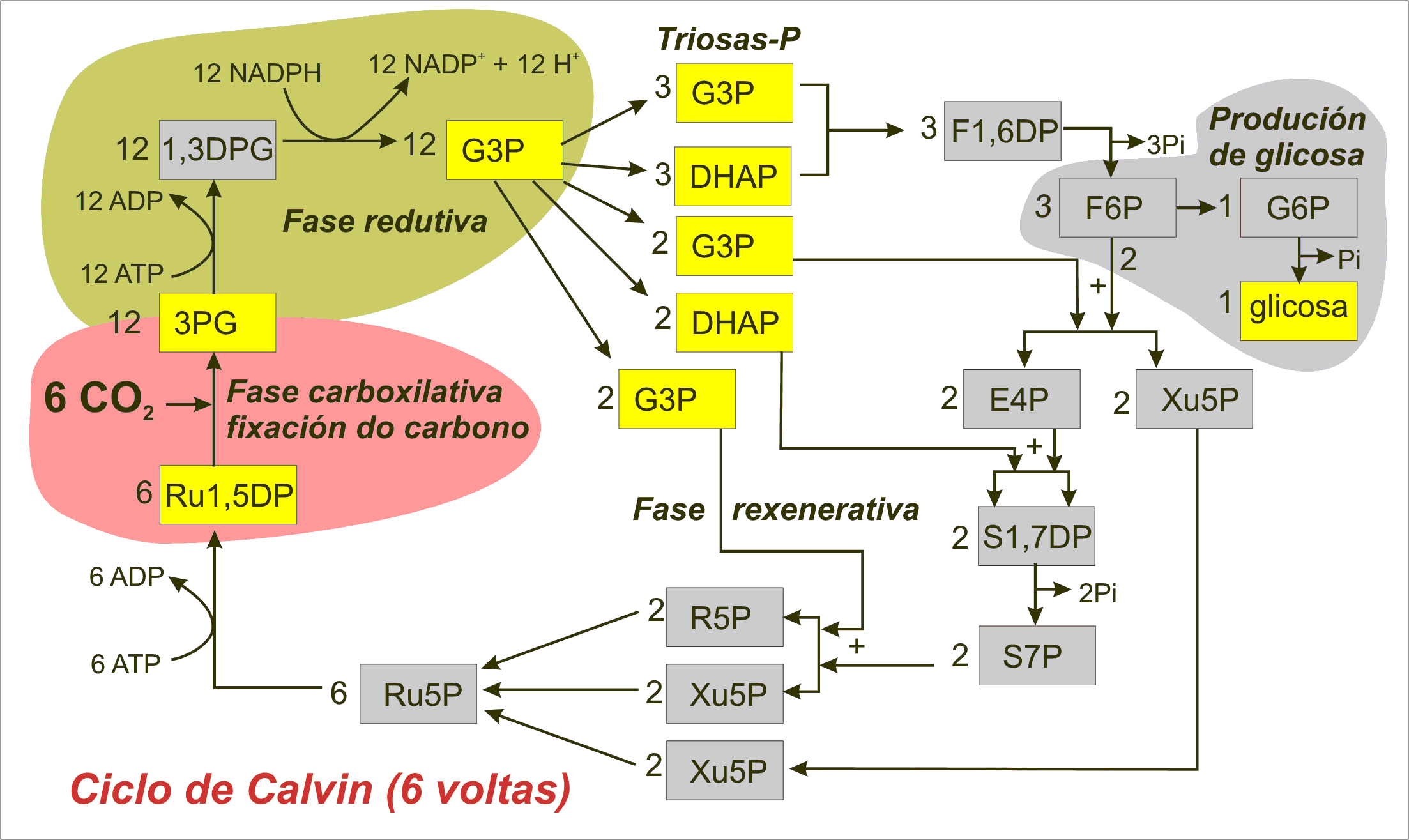
Calvin Cycle 5
—
# Part C. Visual Figures & Scientific Diagrams Gallery
Essential high-resolution reference diagrams for Plant Physiology from the B10logy Visual Atlas.