
 SVG
SVGCalvin Cycle 5
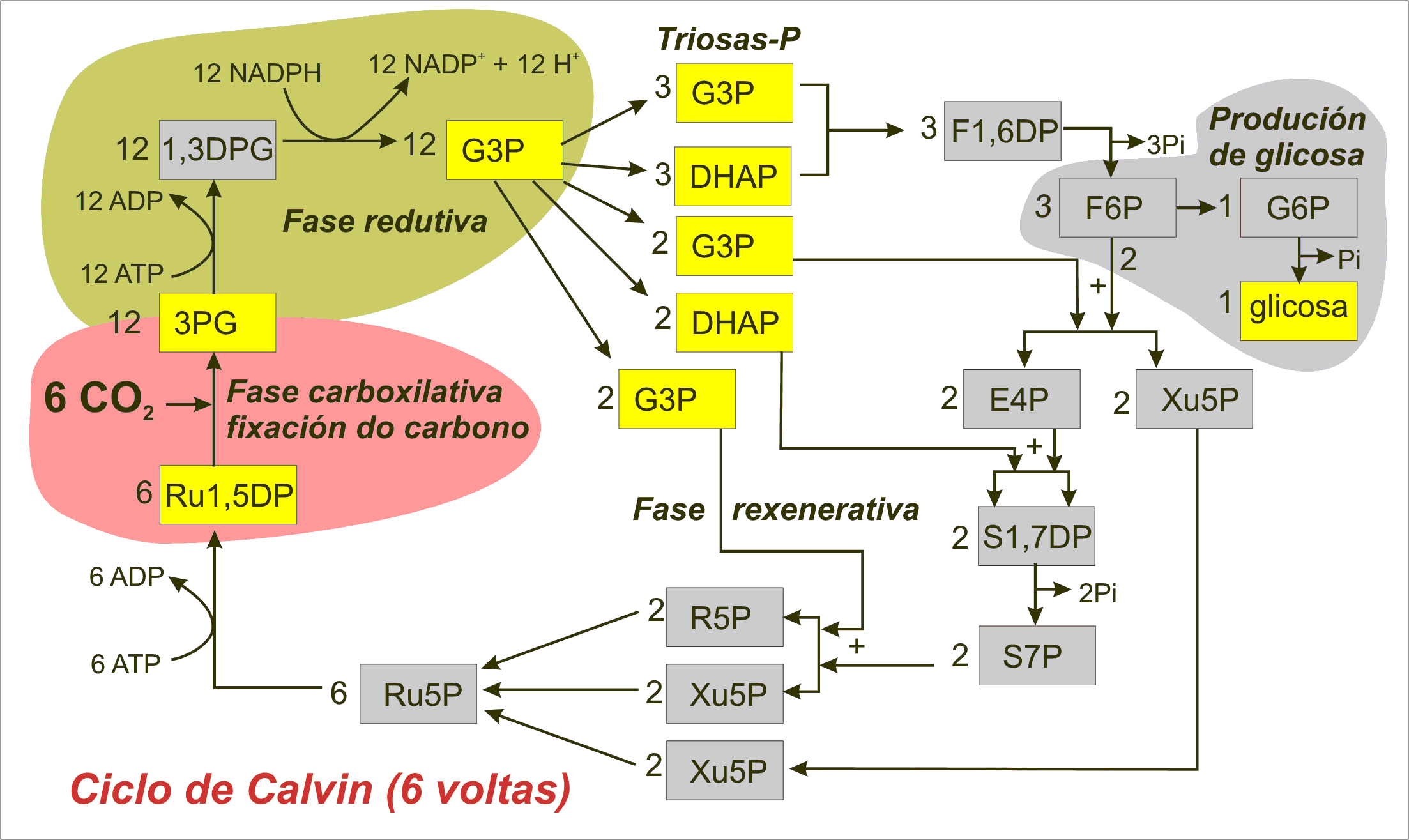
A diagram of the Calvin cycle showing carbon capture from CO2 and carbon output as glyceraldehyde 3-phosphate. Carbon can also exit the cycle as glycerate 3-phosphate, for production of fatty acids, and some amino acids. What is shown here is only the canonical representation of the Calvin cycle, where carbon exits as glyceraldehyde 3-phosphate for gluconeogenesis, or glycerol production. Key: Cir
 SVG
SVGChlorophyll Absorption Spectrum
Photosynthetic autotrophs convert solar radiant energy into chemical energy stored in organic carbohydrates.
 SVG
SVGFlow And Exchange Of Nutrients In The Phloem And Xylem Of Plants
The xylem and phloem are how plants exchange water and nutrients. Water flows from the roots to leaves in the xylem, which is exchanged with the phloem. Nutrients, like sucrose, move in bulk flow from sources (green leaves, stems, etc) to sinks (fruits, budding leaves, tubers, etc) in the phloem. The cells in the walls of the phloem transport nutrients via the symplast and apoplast routes.
 SVG
SVGOpening And Closing Of Stoma
Opening and Closing of Stoma. As K+ levels increase in the guard cells, the water potential of the guard cells drops, and water enters the guard cells.
 SVG
SVGPhototropism
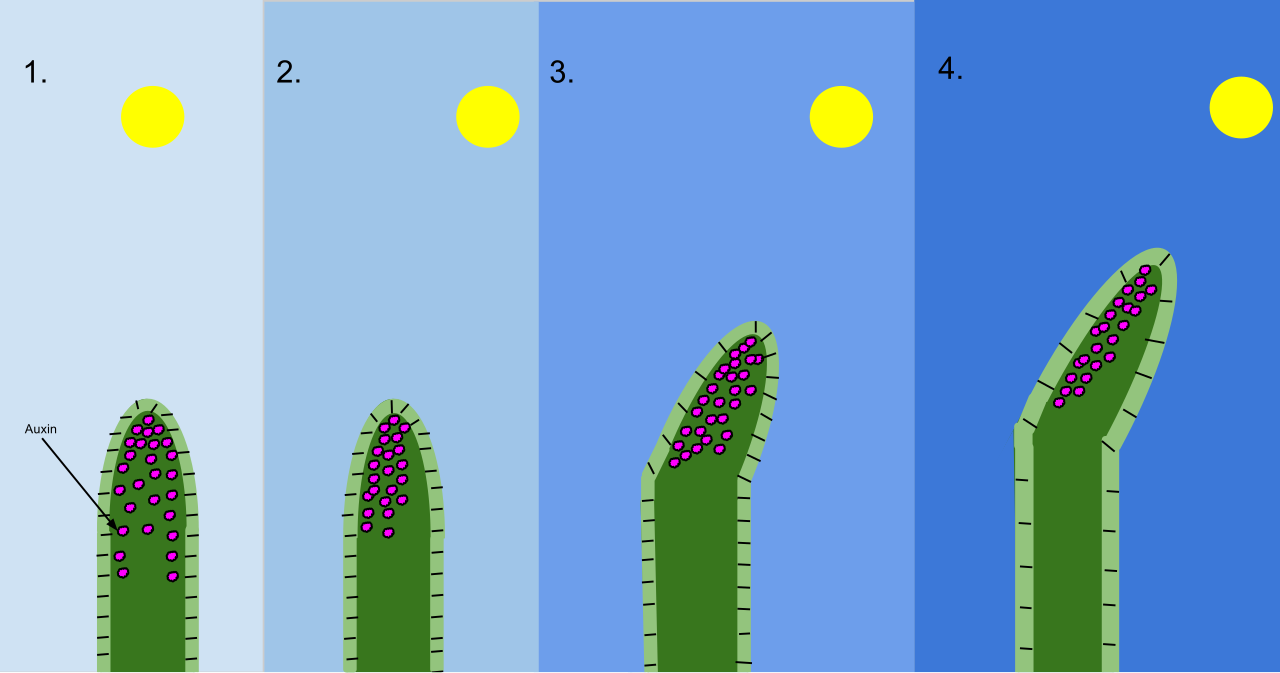
1. This is a normal plant that has the sun positioned almost directly over the plant. During this time, the auxin (pink dots) that lies within the plant is evenly distributed. 2. The sun is now positioned at an angle to the plant. The repositioning of the sun causes the auxin to move the other side of the plant, and becomes more concentrated. This overload of auxin next to these cells causes them
 SVG
SVGThylakoid Membrane 3
Light-dependent reactions of photosynthesis in the thylakoid membrane of plant cells. I redrew and formatted it for a better quality SVG file.
 SVG
SVGC4 Plant Anatomy
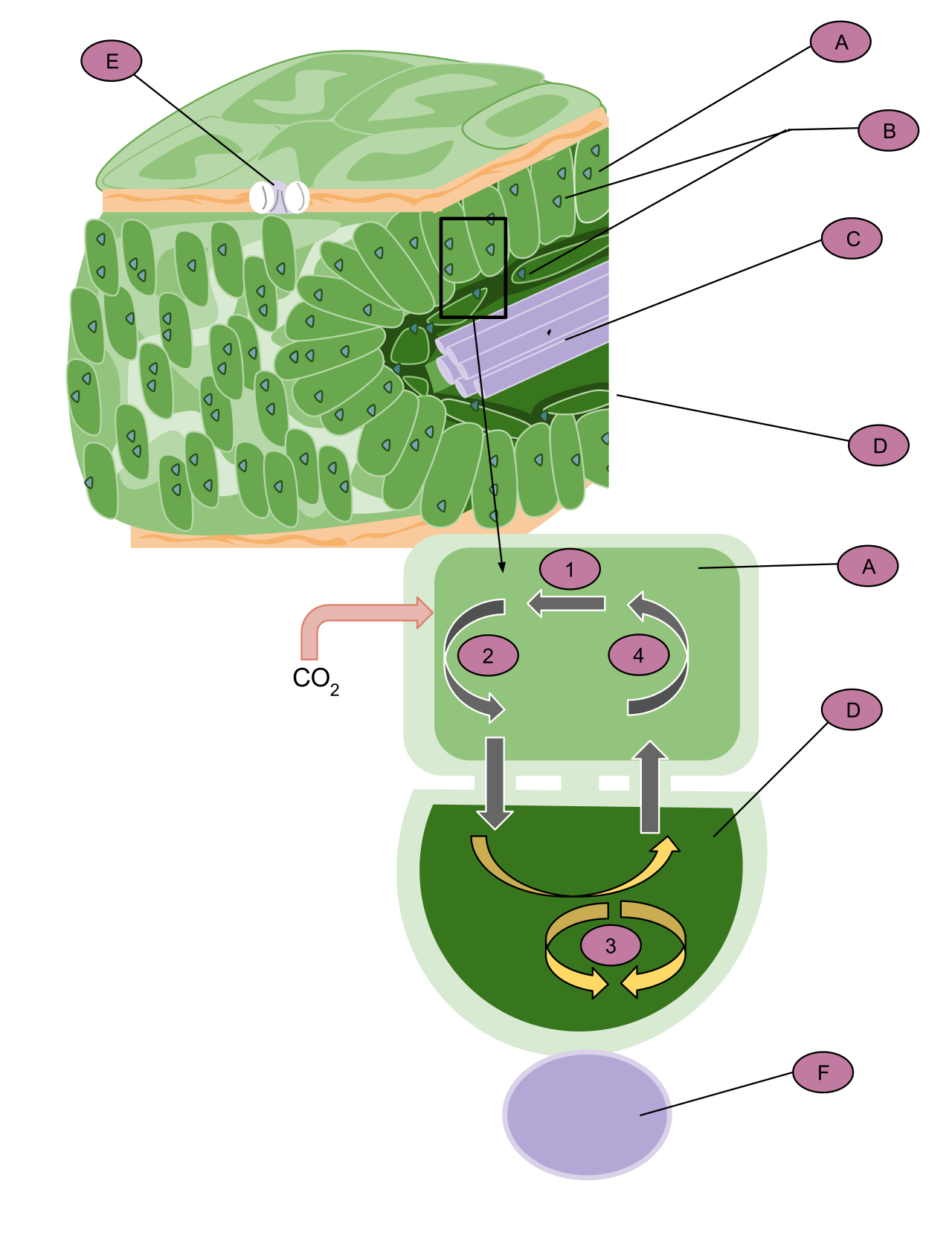
The C4 pathway contains a special structure in the leaves known as Kranz anatomy. There exists a layer of mesophyll cells that contain small chloroplasts encircling bundle sheath cells that have large chloroplasts necessary for the Calvin cycle. A: Mesophyll Cell B: Chloroplast C: Vascular Tissue D: Bundle Sheath Cell E: Stroma F: Vascular Tissue: provides continuous source of water 1) Carbon is fixed to produce oxaloacetate by PEP carboxylase. 2) The four carbon molecule then exits the cell and enters the chloroplasts of bundle sheath cells. 3) It is then broken down releasing carbon dioxide and producing pyruvate. Carbon dioxide combines with ribulose bisphosphate and proceeds to the Calvin Cycle. 4) Pyruvate re-enters the mesophyll cell. It then reacts with ATP to produce the beginning compound of the C4 cycle.
 PNG
PNGInnerworkings Of A Thylakoid
Light energy gets captured by Photosystems I and II, each capturing light with a wavelength of 700 (PSII) and 680 (PSI). The transfered energy gets used in the photolysis of water, splitting it. The electrons drawn from the water get transfered through the membrane using redox reactions, their released energy being used to pump in protons from the Stroma, into the thylakoid. Eventually after going through the Photosystem II, the electrons are used in the NAPP^+ -reductase, while the energy released from the leaving H^+ is used for the ATP-synthesis.
 PNG
PNGCalvin Cycle Miguelferig
Photosynthetic autotrophs convert solar radiant energy into chemical energy stored in organic carbohydrates.
 PNG
PNGPin Function In Auxin Transport
Polar auxin transport with PIN proteins. Cellular uptake of protonated IAAH - the major representative of auxin - from a moderately acidic apoplast, which is maintained by an ATPase activity in the plasma membrane (PM), might proceed via passive diffusion across the PM (red arrow) or via AUX1 auxin/2H+ symport activity. The neutral cytoplasmic pH results in IAAH deprotonation, preventing further diffusion of the growth regulator. PIN positioning at a polar PM domain, as exemplified by the basal domain in this image, will define the sites of IAA− efflux into the apoplast, which is followed by auxin reuptake into the adjacent cell. Ultimately, the directionality of intercellular auxin transport from top to bottom in the cell file on display (black arrows) is defined by a strictly basal PIN polarity in a sequence of adjacent cells.