
 SVG
SVGAn Alveolus
An alveolus is a air sac found in the bronchi of the lungs. The alveoli are surrounded by a capillary bed. The type I pneumocytes allow gas exchange, while the type II pneumocytes produce surfactant to prevent the collapse of the alveolus.
 SVG
SVGDigestive System
The gastrointestinal tract, also called the digestive tract, alimentary canal, or gut, is the system of organs within multicellular animals that takes in food, digests it to extract energy and nutrients, and expels the remaining waste.
 SVG
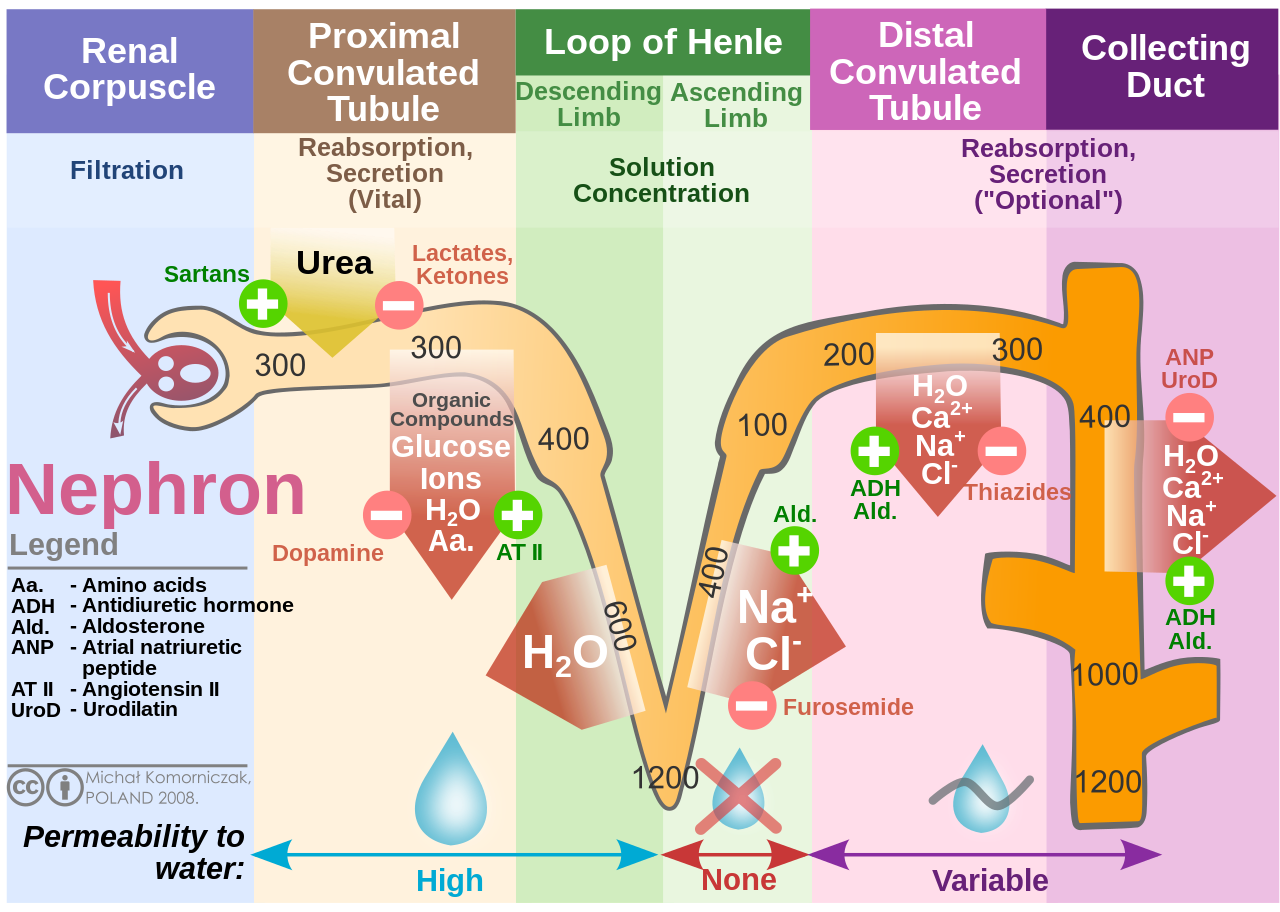
SVGKidney Nephron Molar Transport
Nephron, Diagram of the urine formation. The number inside tubular urin concentration in mOsm/l - when ADH acts
 SVG
SVGOxygen Haemoglobin Dissociation Curves
Hemoglobin is an allosteric heterotetrameric (α₂β₂) metalloprotein in red blood cells that transports oxygen from respiratory surfaces to peripheral tissues.
 SVG
SVGPhases Of The Cardiac Cycle
Diagram describing the phases of the human cardiac cycle. Vectorization of File:2027 Phases of the Cardiac Cycle.jpg. Created upon request.
 SVG
SVGSarcomere
The eukaryotic cytoskeleton is a dynamic filament lattice composed of actin microfilaments, microtubules, and intermediate filaments.
 SVG
SVGAmphibian Egg
Amphibian Egg: 1. Jelly Capsule 2. Vitelline Membrane 3. Perivitelline Fluid 4. Yolk Plug 5. Embryo The jelly capsule is designed to protect the embryo from the outside environment. This capsule also prevents the egg from drying out. The vitelline membrane is a membrane surrounding the egg. Upon fertilization, this membrane splits off from the surface of the egg and the space between the vitelline
 SVG
SVGLimb Bud
Sonic hedgehog in limb development, based on material published in Harfe BD, Scherz PJ, Nissim S, Tian H, McMahon AP and Tabin CJ (2004). "Evidence for an expansion-based temporal Shh gradient in specifying vertebrate digit identities". Cell 118 (4): 517-528.
 SVG
SVGNeural.Crest.Cells.Migration
Cross section scheme of vertebrate embryo. 1 – neural crest, 2 – neural tube, 3 – dorsal somite, 4 – notochord. Both paths of the neural crest cells migation marked by arrows: red one is the dorsolateral path, blue one signs the ventromedial path.
 SVG
SVGProtovsdeuterostomes
This diagram is showing the difference of the two major types of coelomates: the protostomes (molluscs, annelids, arthropods, ...) and deuterostomes (echinoderms, vertebrates, ...). These groups differ in several characteristics of early development; In deuterostomes blastula divisions is called "radial cleavage" because it occurs parallel or perpendicular to the major polar axis. In protostomes t
 SVG
SVGVetebrateembryo
This diagram depicts a cross section of a vertebrate embryo in the neurula stage. This stage is characterized by development of the nervous system through the formation of the neural tube. The neural tube later develops into the brain and the spinal cord. The other structures in the diagram also play major roles in development. The notochord functions as a dorsal supporting rod until it is replace
 SVG
SVGAllopatric Speciation Caused By Topography
Allopatric speciation can result from elevational topography. Climatic changes can drive species into altitudinal zones, isolating populations. 1: Higher elevation peaks act as "islands" to promote speciation. 2: Lower elevation valleys act as "islands" to promote speciation.[1]
 SVG
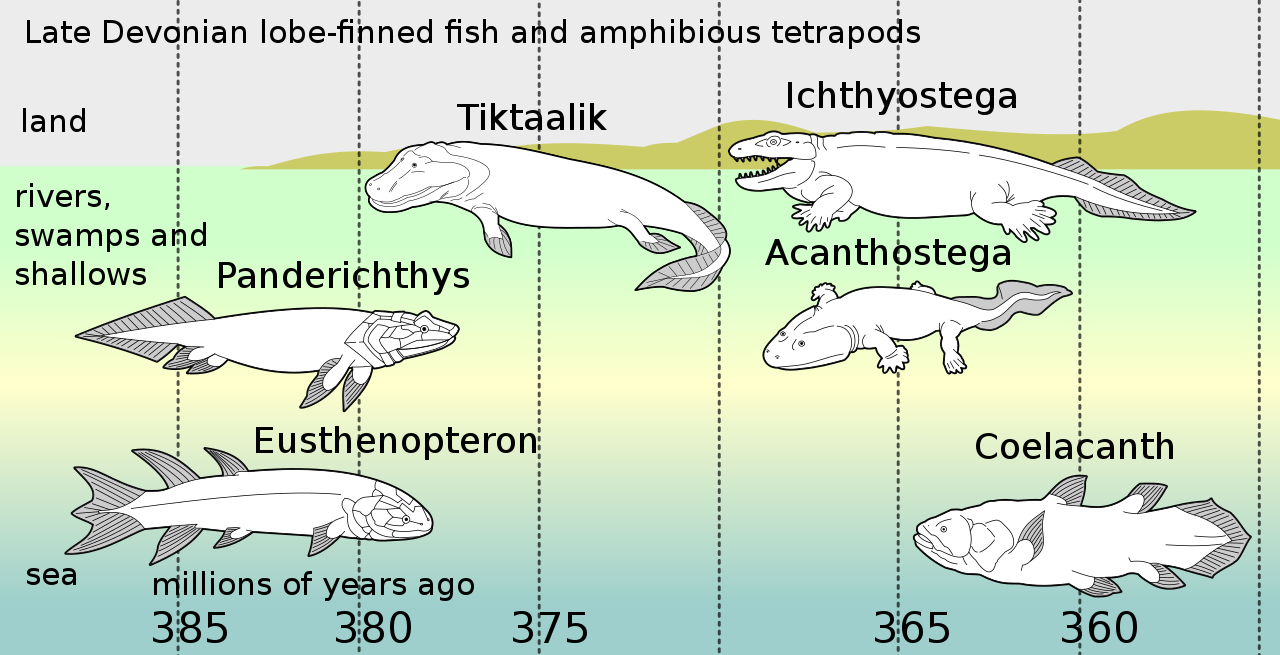
SVGFishapods
Evolutionary mechanisms and ecological trophic dynamics structure biodiversity across spatial and temporal scales.
 SVG
SVGGeologic Time Scale Spiral Ics Colours (Light) Path Text
The geologic time scale proportionally represented as a log-spiral. Some key events in Earth's history are marked on the diagram, including major extinction events, global scale glaciations, the initiation of permanent atmospheric oxygen, the formation of the moon, and the formation of Earth's magnetic field. The outer spiral arcs show components of the evolution of life on Earth. Ma=Megaannus (un
 SVG
SVGHomology Vertebrates
The principle of homology: The biological derivation relationship (shown by colors) of the various bones in the forelimbs of four vertebrates is known as homology and was one of Darwin’s arguments in favor of evolution.
 SVG
SVGPatterns Of Natural Selection
Diagram showing how allele frequencies can respond to natural selection (stabilizing, disruptive, and directional to either extreme).
 SVG
SVGSpeciation By Reinforcement Schematic
A simplified diagram of the process of reinforcement. Two incipient species evolve complete reproductive isolation due to selection rejecting unfit hybrids. Here, mate discrimination acts to reinforce the speciation process.
 SVG
SVGSympatric Speciation Schematic
A simplified diagram of sympatric speciation. Reproductive isolation evolves within a population without the aide of geographic barriers.
 PNG
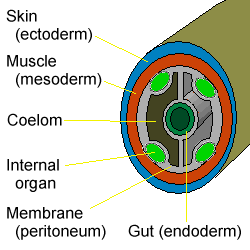
PNGCoelomate 01
This detailed scientific diagram illustrates Coelomate 01 in the context of Zoology.
 PNG
PNGLms-And-Sems-Of-B-And-P-Mastigophores
LMs and SEMs of b- and p-mastigophores. a) Undischarged mesobasic b-mastigophores of Metridium senile. b) Undischarged p-mastigophores of Cariophyllia smithi. c) A discharged mesobasic heterotrichous b-mastigophore of M. senile. d) Parts of shafts of homotrichous mesobasic b-mastigophores of M. senile. e) Parts of darts from M. senile.
 PNG
PNGNematocyst-Discharge Process
Authoritative scientific diagram illustrating Nematocyst-discharge process with academic labeling and conceptual fidelity.
 SVG
SVGGrasshopper Mouth Anatomy
This detailed scientific diagram illustrates Grasshopper Mouth Anatomy in the context of Zoology.
 SVG
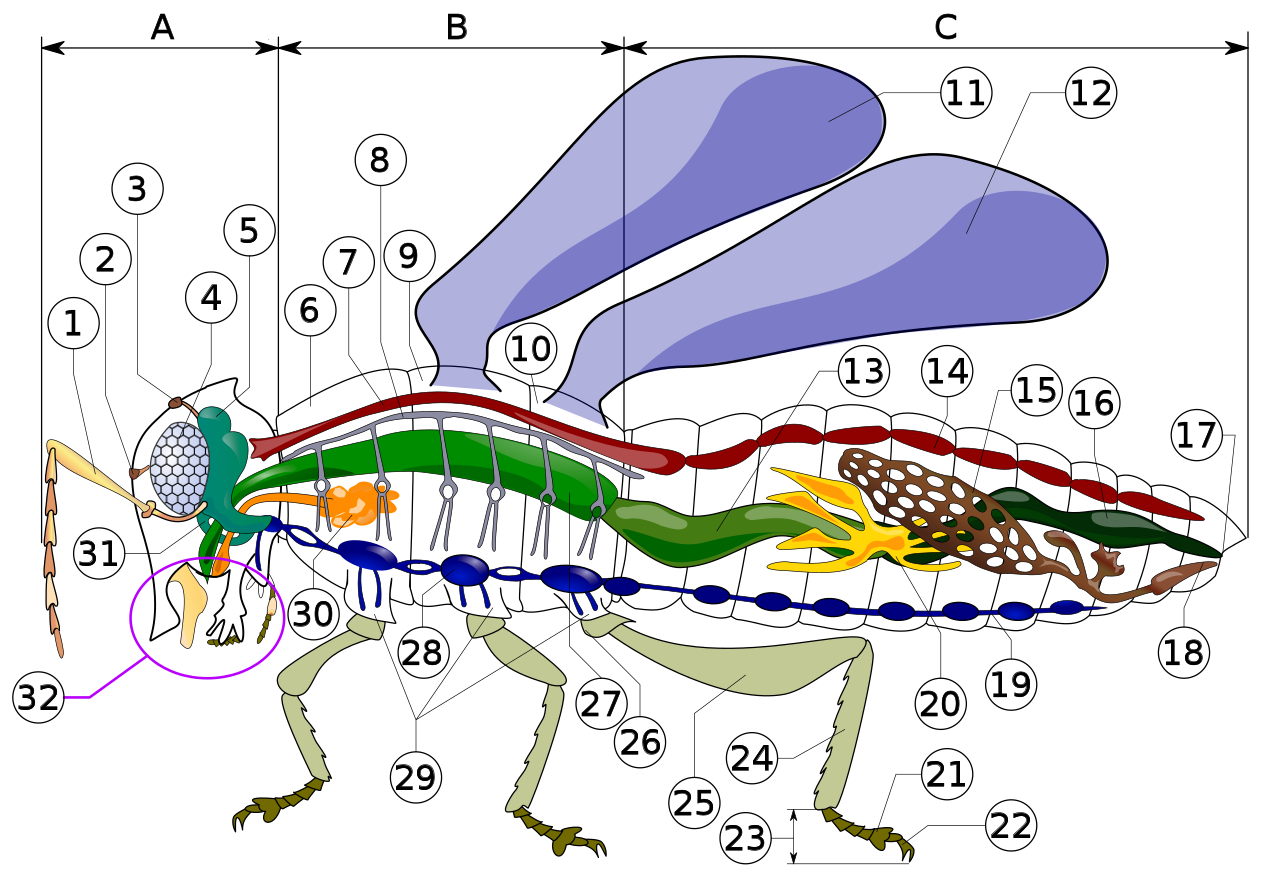
SVGInsect Anatomy
This detailed scientific diagram illustrates Insect Anatomy in the context of Zoology.
 SVG
SVGArchimollusc-
Anatomical diagram of the hypothetical ancestral mollusc (“HAM”). Nervous system is hypoathroid. Unsegmented, bilaterally symmetrical body, organs occur either singly or in pairs (no metamerism), hemocoel circulatory system filled with hemocyanin, gametes ejected into pericardium and travel through nephridia to environment.
 SVG
SVGArchimollusc
This detailed scientific diagram illustrates Archimollusc in the context of Zoology.
 PNG
PNGHomology Vertebrates--Bw
The principle of homology: The biological derivation relationship (shown by colors) of the various bones in the forelimbs of four vertebrates is known as homology and was one of Darwin’s arguments in favor of evolution. NOTE : Black-and-White version of original " File:Homology vertebrates-en.svg " image created via following programs: " Inkscape " (version 0.92.4) [bw image], " PrintScreen " (Windows 10), " Paint " (Windows 10) [png image] and " JASC Paint Shop Pro " (version 6.02) [crop] - Enjoy! :) Drbogdan ( talk ) 14:39, 15 February 2019 (UTC)