
 SVG
SVGGel Electrophoresis In Dna Fingerprinting
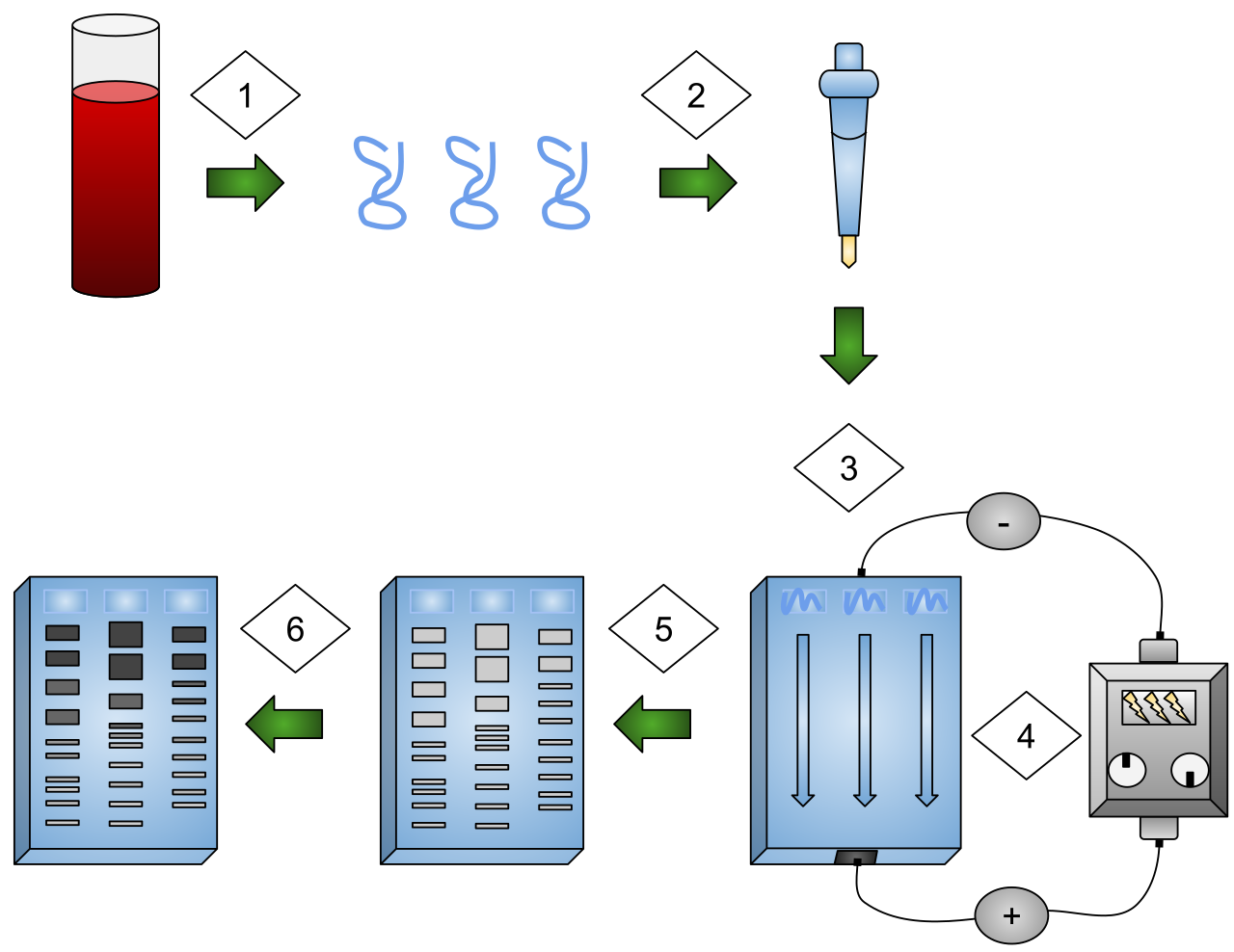
This is a diagram that illustrates the process of Gel electrophoresis. Gel electrophoresis is used for DNA fingerprinting, and is very useful in crime investigation since every individual has different DNA patterns. DNA can be extracted from any sample of body fluid(i.e. blood, semen, or saliva). DNA is mixed with restriction enzyme and amplified with PCR. The mixture of DNA fragment plus restrict
 SVG
SVGGenome Editing With The Crispr Cas9 Method, Schematic
The molecular machinery of the central dogma governs genetic storage, replication, transcription, and translation in living systems.
 SVG
SVGGolden Gate Assembly
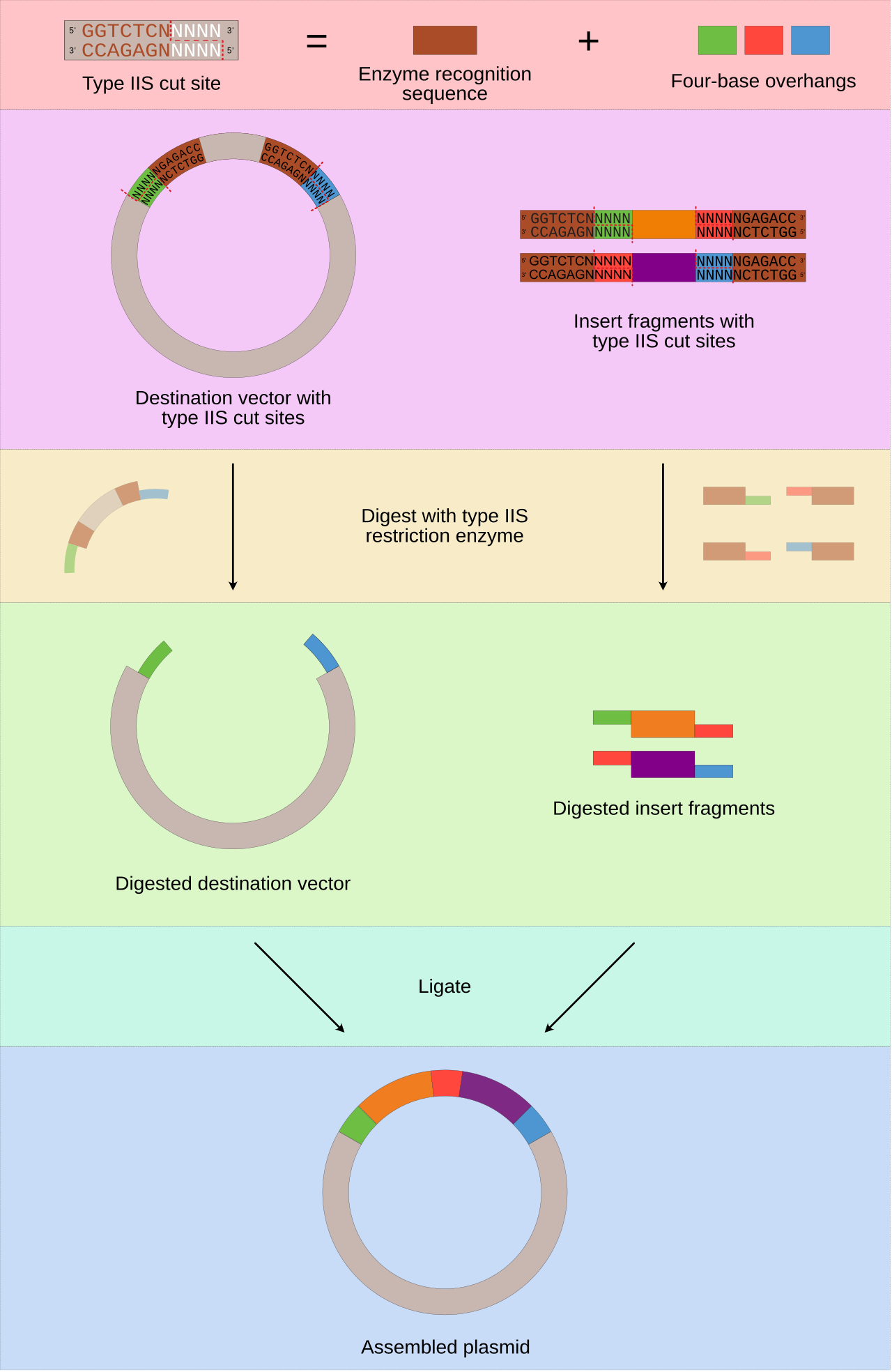
Golden Gate assembly involves digesting DNA sequences containing a type IIS restrection enzyme cut site and ligating them together.
 SVG
SVGPbr322 Map
The molecular machinery of the central dogma governs genetic storage, replication, transcription, and translation in living systems.
 SVG
SVGPcr
Diagram of PCR reaction to demonstrate how amplification leads to the exponential growth of a short product flanked by the primers. Schematic drawing of the PCR cycle. Denaturing at 96°C. Annealing at 68°C. Elongation at 72°C. The first cycle is complete. The two resulting DNA strands make up the template DNA for the next cycle, thus doubling the amount of DNA duplicated for each new cycle.
 SVG
SVGReverse Transcription Polymerase Chain Reaction Scheme
Schematic diagram of RT-PCR showing that RNA isolated from cells or tissue is used as substrate in reverse transcription for synthesis of cDNA that will serve as template for amplification by PCR (denaturation, annealing, extension). Based on Santos et al. (2004), DOI: 10.1590/S1678-77572004000100002.
 SVG
SVGAlternation Of Generations
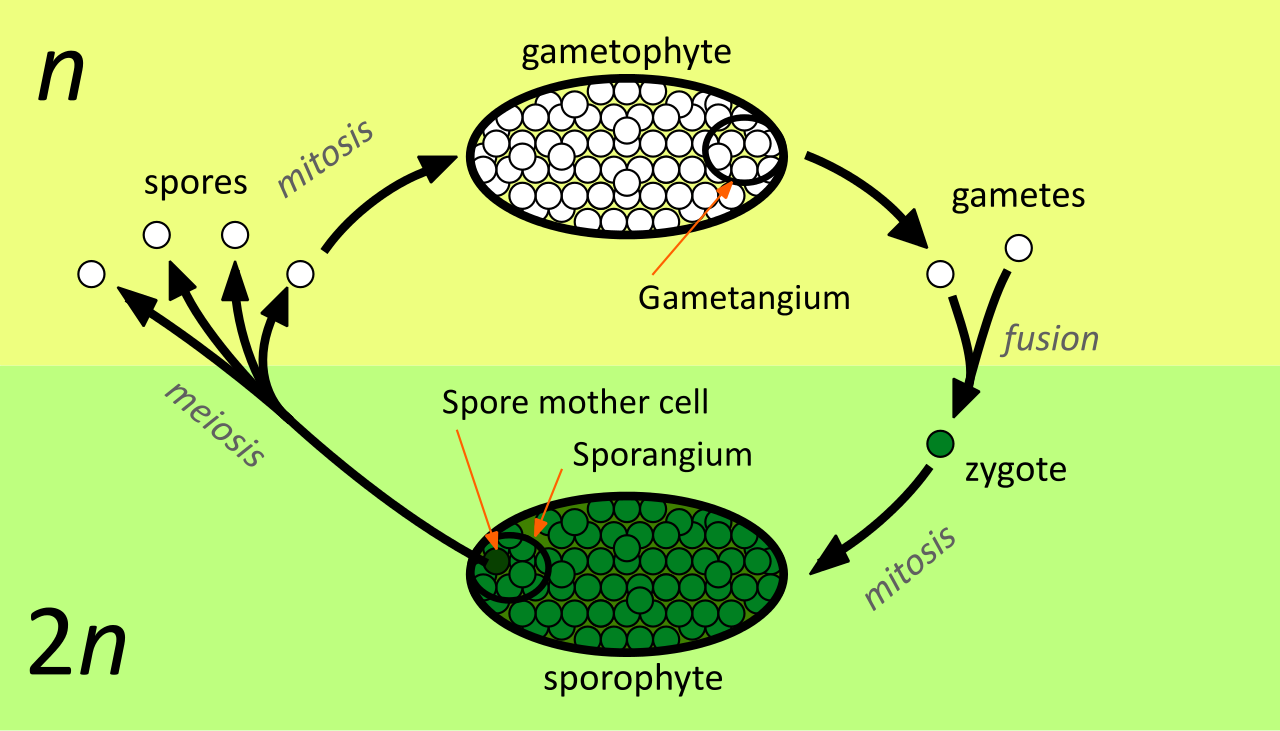
The molecular machinery of the central dogma governs genetic storage, replication, transcription, and translation in living systems.
 SVG
SVGAngiosperm Life Cycle
Photosynthetic autotrophs convert solar radiant energy into chemical energy stored in organic carbohydrates.
 SVG
SVGDiplohaplontic
This detailed scientific diagram illustrates Diplohaplontic in the context of Plant Biotechnology.
 SVG
SVGGymnosperm Life Cycle
life cycle of a conifer a gymnosperm based on this image https://commons.wikimedia.org/wiki/File:Angiosperm_life_cycle_diagram-en.svg https://commons.wikimedia.org/wiki/File:Pine_organs_and_tissues.svg https://commons.wikimedia.org/wiki/File:Pinus_zweig_mit_männlichen_blüten.png https://commons.wikimedia.org/wiki/File:Strobilo_e_Pigna.jpg
 SVG
SVGMature Flower
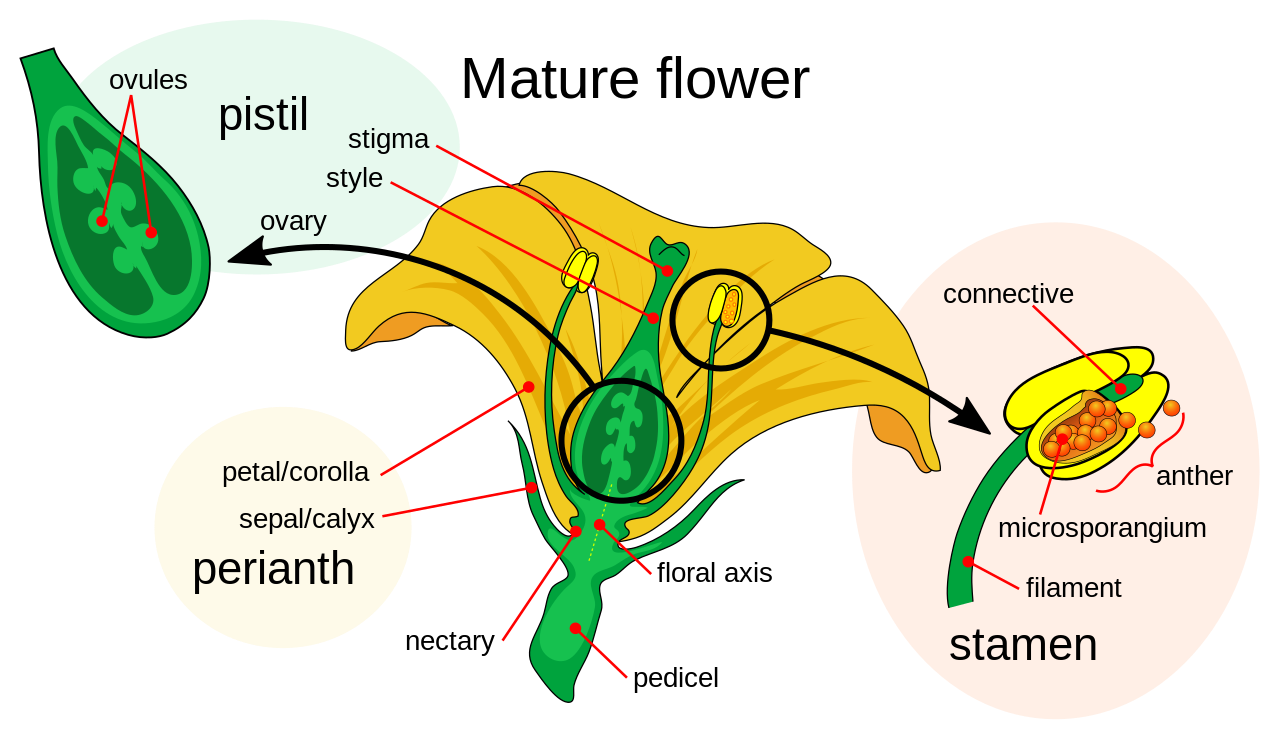
This detailed scientific diagram illustrates Mature Flower in the context of Plant Biotechnology.
 SVG
SVGMoss Life Cycle
illustrated life cycle of Polytrichum sp. 1) the sporophyte 2) the spores 3) the spores germinate into a protonema 4) antheridia 5) archegonia 6) fertilization
 SVG
SVGOrchid Reproductive Anatomy
Orchid reproductive anatomy, using a Brassia. The flower is adapted for insect pollination. Male (stamen) and female (stigma, style) parts are fused to form a column. The anther is specialised with a sticky viscidium to attach to a visiting insect; a caudicle supports two pollinia, which contain all the pollen grains. The anther is covered by a cap that prevents self-fertilisation; it detaches whe
 SVG
SVGTransfection By Agrobacterium
This detailed scientific diagram illustrates Transfection By Agrobacterium in the context of Plant Biotechnology.
 PNG
PNGFpls-02-00032-G
Fluorescence resonance energy transfer analysis of NtWRKY12 interacting with NtWRKY12, TGA2.1, and TGA2.2. Arabidopsis protoplasts were cotransfected with the indicated expression constructs. (A) Protoplasts transfected with a plasmid encoding a YFP:CFP tandem fusion (solid line) and protoplasts transfected with plasmids expressing unfused CFP and YFP (stippled line) were used as positive and negative FRET controls, respectively. (B–D) FRET data from protoplasts transfected with a combination of NtWRKY12:YFP (B), TGA2.1:YFP (C) or TGA2.2:YFP (D), and NtWRKY12:CFP (solid lines), compared to unfused CFP (stippled lines). After excitation at 457 nm, emission energies were measured in a total of 30, 5 nm wide intervals between 468 and 587 nm using confocal microscopy. Data from five protoplasts were averaged and normalized. FRET is presented by the slopes of lines connecting emission intensities at 475 nm (CFP quenching) and 527 nm (YFP emission). Error bars represent the SEM.
 SVG
SVGGene Gun
A gene gun is used for injecting cells with genetic information, it is also known as biolistic particle delivery system. Gene guns can be used effectively on most cells but are mainly used on plant cells. Step 1 The gene gun apparatus is ready to fire. Step 2 When the gun is turned on and the helium flows through. Step 3 The helium moving the disk with DNA coated particles toward the screen. Step 4 The helium having pushed the particles moving through the screen and moving to the target cells to transform the cells.