
7.1 Common Infectious Diseases: Typhoid (Salmonella typhi / Widal test), Pneumonia (Streptococcus pneumoniae), Common Cold (Rhino viruses) #
For a long time, health was considered as a state of body and mind where there was a balance of certain ‘humors’ (asserted by early Greeks like Hippocrates and the Indian Ayurveda system). It was thought that persons with ‘black bile’ had hot temperaments and would have fevers. This reflective humor hypothesis was completely disproved by William Harvey’s discovery of blood circulation and his demonstration of normal body temperature in persons with black bile using a thermometer!
Today, health is not simply the absence of disease or physical fitness. According to NCERT and the WHO, Health is defined as: “A state of complete physical, mental, and social well-being.”
Health is affected by: (1) genetic disorders, (2) infections, and (3) our lifestyle (food, water, rest, exercise, and habits). Disease-causing biological agents are termed pathogens. Diseases are broadly classified into infectious (communicable) diseases, which easily transmit from one person to another (e.g., AIDS, common cold), and non-infectious diseases (e.g., Cancer, cardiovascular disease).
7.2 Protozoan & Helminthic Pathogens: Malaria (Plasmodium vivax / falciparum Life Cycle: Mosquito Vector & Human Liver/RBCs), Amoebiasis, Filariasis & Ringworm #
Common infectious bacterial diseases affecting humans:
- Typhoid Fever: Caused by the pathogenic bacterium Salmonella typhi.
- Enters the human small intestine through contaminated food and drinking water and migrates to other organs via blood.
- Symptoms: Sustained high fever (39°C to 40°C / 103°F to 104°F), general weakness, stomach pain, constipation, headache, and loss of appetite. In severe cases, intestinal perforation and death may occur.
- Diagnosis: Confirmed clinically by the Widal Test (an agglutination reaction).
- Classic Medical Case: Mary Mallon, nicknamed ‘Typhoid Mary’, was an asymptomatic cook who continued to spread typhoid for several years through the food she prepared.
- Pneumonia: Caused by bacteria such as Streptococcus pneumoniae and Haemophilus influenzae.
- Infects the alveoli (air sacs) of the lungs. As a result of infection, the alveoli get filled with fluid, causing severe difficulties in respiration.
- Transmission: Inhaling droplets/aerosols released by an infected person, or sharing contaminated glasses and utensils.
- Symptoms: Fever, chills, cough, headache. In severe untreated cases, the lips and fingernails may turn gray to bluish due to acute hypoxia.
- Other bacterial diseases mentioned in NCERT include Dysentery (Shigella), Plague (Yersinia pestis), and Diphtheria (Corynebacterium diphtheriae).
7.3 Innate Immunity: Physical (Skin, Mucosa), Physiological (Acid, Lysozyme), Cellular (PMNL, Monocytes) & Cytokine Barriers (Interferons) #
Common viral and fungal pathogens affecting humans:
- The Common Cold: Caused by Rhinoviruses, representing one of the most infectious human ailments.
- Rhinoviruses infect the nose and respiratory tract, but NOT the lungs! (Crucial distinction: pneumonia infects alveoli in lungs, whereas common cold affects only upper respiratory passage).
- Symptoms: Nasal congestion, rhinorrhea (running nose), sore throat, hoarseness, cough, headache, and tiredness, typically lasting 3 to 7 days. Transmitted via aerosols or contaminated objects (pens, books, cups, door knobs).
- Ringworm (Fungal Dermatophytosis): One of the most common infectious skin diseases in humans, caused by fungi belonging to three genera: Microsporum, Trichophyton, and Epidermophyton.
- Symptoms: Appearance of dry, scaly, itchy lesions on various body parts such as skin, nails, and scalp, accompanied by intense itching.
- Transmission: Heat and moisture help these fungi thrive in skin folds (groin, between toes). Acquired from soil or by using towels, clothes, or combs of infected individuals.
7.4 Acquired Immunity: Humoral (B-Cells, Antibodies H2L2: IgG, IgA Colostrum, IgM, IgE Allergy) & Cell-Mediated Immunity (T-Cells / Graft Rejection) #
Diseases caused by protozoan and helminthic parasites:
- Malaria: Caused by a tiny protozoan, Plasmodium (species: P. vivax, P. malariae, and P. falciparum). Plasmodium falciparum causes malignant malaria, the most serious and potentially fatal form.
Life Cycle of Plasmodium (Digenetic, requires two hosts):
- When an infected female Anopheles mosquito bites a human, it injects the infectious stage of the parasite: sporozoites.
- Sporozoites travel through blood to the liver, where they multiply asexually within hepatocytes, eventually bursting the liver cells.
- Parasites enter Red Blood Cells (RBCs) and reproduce asexually, rupturing RBCs. The rupture of RBCs is associated with the release of a toxic chemical called Hemozoin, which is responsible for the recurring high chills and high fever every 3 to 4 days!
- Some parasites differentiate into sexual stages (male and female gametocytes) in RBCs.
- When a female Anopheles mosquito bites an infected person, it ingests gametocytes with the blood meal. Fertilization and development occur inside the mosquito’s gut.
- Mature infective sporozoites migrate to the mosquito’s salivary glands, ready to infect a new human host.
- Amoebiasis (Amoebic Dysentery): Caused by the protozoan parasite Entamoeba histolytica in the large intestine of humans. Symptoms: constipation, abdominal pain and cramps, stools with excess mucous and blood clots. Houseflies act as mechanical carriers transmitting cysts from feces to food.
- Ascariasis: Caused by Ascaris lumbricoides, an intestinal roundworm parasite. Symptoms: internal bleeding, muscular pain, fever, anemia, and blockage of the intestinal passage. Eggs excreted in feces contaminate soil, water, and plants.
- Filariasis (Elephantiasis): Caused by filarial worms: Wuchereria bancrofti and Wuchereria malayi. The worms live inside the lymphatic vessels of the lower limbs for many years, causing chronic inflammation and gross deformities of the lower limbs and genital organs (elephant-like swelling). Transmitted by the bite of female Culex mosquitoes.
7.5 Active vs Passive Immunity & Principles of Vaccination and Immunization #
Immunity is the overall ability of the host to fight against disease-causing organisms, mediated by the immune system. Immunity is categorized into Innate Immunity (non-specific, present from birth) and Acquired Immunity (pathogen-specific, acquired during lifetime with immunological memory):
- Innate Immunity (Four Barriers):
- Physical Barriers: Skin (primary physical barrier preventing pathogen entry); mucus coating of respiratory, gastrointestinal, and urogenital epithelial tracts.
- Physiological Barriers: Acid in stomach (HCl), saliva in mouth, and tears from eyes (containing antibacterial lysozyme).
- Cellular Barriers: Leukocytes like Polymorphonuclear leukocytes (PMNL-neutrophils), monocytes, natural killer (NK) cells, and tissue macrophages that phagocytose and destroy microbes.
- Cytokine Barriers: Virus-infected cells secrete glycoproteins called Interferons (IFNs), which protect surrounding non-infected cells from further viral infection.
- Acquired Immunity: Characterized by memory. When the body encounters a pathogen for the first time, it mounts a slow, low-intensity primary immune response. Subsequent encounter with the same pathogen elicits a highly intensified, rapid secondary (anamnestic) response. Acquired immunity is mediated by two types of lymphocytes:
- B-Lymphocytes (Humoral Immune Response / Antibody-Mediated): B-cells produce an army of protective proteins called Antibodies that circulate in blood plasma and lymph.
Structure of an Antibody Molecule: Each antibody molecule is a Y-shaped glycoprotein consisting of four polypeptide chains: two identical light (L) chains and two identical heavy (H) chains linked by disulfide bonds, represented as H2L2. Different classes include IgA, IgM, IgE, IgG, and IgD. IgA is found in colostrum and body secretions; IgE mediates allergic reactions; IgG crosses the placenta.
- T-Lymphocytes (Cell-Mediated Immunity – CMI): T-cells do not secrete antibodies directly, but helper T-cells (CD4+) stimulate B-cells to produce antibodies, and cytotoxic T-cells (CD8+) directly destroy infected cells and tumor cells. Crucial NCERT fact: Cell-Mediated Immunity (CMI) is responsible for graft rejection in organ transplants! The body distinguishes ‘self’ from ‘non-self’ via CMI; hence, tissue typing, HLA matching, and immunosuppressants (cyclosporin A) are mandatory before and after transplantation.
- B-Lymphocytes (Humoral Immune Response / Antibody-Mediated): B-cells produce an army of protective proteins called Antibodies that circulate in blood plasma and lymph.
7.6 Autoimmunity (Rheumatoid Arthritis) & Immune System Organs: Primary (Bone Marrow, Thymus) vs Secondary (Spleen, Lymph Nodes, MALT 50%) #
Active vs Passive Immunity:
- Active Immunity: When a host is exposed to living or dead antigens, antibodies are produced actively by the host’s own immune system. Active immunity is slow and takes time to develop, but provides long-lasting immunological memory. Acquired naturally after infection or artificially through vaccination (e.g., Polio, MMR, BCG vaccines).
- Passive Immunity: When ready-made pre-formed antibodies are directly administered to the body to protect against foreign agents. Passive immunity provides immediate protection but no long-term memory:
- Yellowish colostrum secreted by the mother during initial days of lactation contains abundant IgA antibodies protecting the infant.
- Fetus receives maternal IgG antibodies through the placenta during pregnancy.
- In snake bites, pre-formed antibodies against snake venom (anti-venom) are injected directly to neutralize the toxin immediately. Similarly, anti-tetanus serum is administered for deep contaminated wounds.
7.7 Acquired Immuno Deficiency Syndrome (AIDS): Human Immunodeficiency Virus (HIV), Reverse Transcriptase, CD4+ Helper T-Cell Destruction, ELISA Diagnostic #
Autoimmunity: The immune system has the unique ability to distinguish self-cells from foreign molecules. In rare cases due to genetic and environmental factors, this self-tolerance is lost, and the immune system attacks the body’s own cells, leading to damage. This is called an autoimmune disease. Classic example: Rheumatoid Arthritis, where antibodies attack the synovial membranes of joints.
The Human Immune System Organs:
- Primary Lymphoid Organs: Organs where immature lymphocytes differentiate and mature into antigen-sensitive lymphocytes:
- Bone Marrow: The main lymphoid organ where all blood cells including B and T lymphocytes are produced, and where B-lymphocytes mature.
- Thymus: Lobed organ located behind the sternum above the heart where T-lymphocytes mature.
- Secondary Lymphoid Organs: Sites where lymphocytes interact with antigens and proliferate to become effector cells:
- Spleen: Large bean-shaped organ containing lymphocytes and phagocytes. Acts as a vascular filter trapping blood-borne microorganisms and a reservoir of erythrocytes.
- Lymph Nodes: Small solid structures located along lymphatic vessels trapping microbes present in lymph.
- MALT (Mucosa-Associated Lymphoid Tissue): Lymphoid tissue located within the mucosal lining of the respiratory, digestive, and urogenital tracts. MALT constitutes approximately 50% of the lymphoid tissue in the human body!
7.8 Cancer Biology: Benign vs Malignant Tumors, Metastasis, Contact Inhibition Loss, Oncogenes, Carcinogens, Biopsy, Chemotherapy & Immunotherapy #
Acquired Immuno Deficiency Syndrome (AIDS): First reported in the USA in 1981, AIDS has killed over 25 million people globally. AIDS is caused by the Human Immunodeficiency Virus (HIV), a member of the group Retroviruses, which have an RNA genome enclosed in an envelope.
Pathogenesis and Mechanism of HIV Infection:
- HIV enters the human body via sexual contact, blood transfusion, infected needles, or from mother to child through placenta.
- HIV initially enters macrophages. The viral reverse transcriptase enzyme copies viral RNA into viral DNA.
- The viral DNA integrates into the host cell’s genome and directs the infected macrophage to produce viral particles. Macrophages continue to produce virus particles, acting like an HIV factory!
- Simultaneously, HIV enters Helper T-Lymphocytes (CD4+ T-cells), replicates, and releases progeny viruses that attack other CD4+ cells.
- This results in a progressive, drastic reduction in the count of helper T-lymphocytes in the patient’s body.
- As helper T-cells decline, the patient suffers from bouts of fever, diarrhea, and weight loss, becoming severely immunocompromised and succumbing to opportunistic infections by bacteria (Mycobacterium), viruses, fungi, and parasites like Toxoplasma.
A widely used diagnostic test for AIDS is the ELISA (Enzyme-Linked Immunosorbent Assay). Treatment with anti-retroviral drugs is only partially effective, prolonging life but cannot prevent death.
7.9 Drugs and Alcohol Abuse: Opioids (Heroin / Smack from Papaver somniferum), Cannabinoids (Cannabis sativa), Cocaine / Crack (Erythroxylum coca) #
Cancer Biology: In normal cells, cell growth and division are strictly regulated. Normal cells exhibit a property called contact inhibition: contact with other cells inhibits their uncontrolled proliferation. Cancer cells lose this property of contact inhibition, continuing to divide uncontrollably to form masses of cells called tumors:
- Benign Tumors: Remain confined to their original location and do not spread to other parts; cause relatively little damage.
- Malignant Tumors (True Cancers): A mass of proliferating neoplastic cells that grow rapidly, invading and damaging surrounding normal tissues. Cells slough off from tumors and travel via blood to distant sites, initiating secondary tumors wherever they lodge. This fearsome property is called Metastasis (the most dreaded characteristic of malignant tumors!).
- Causes of Cancer: Transformation of normal cells into cancerous cells is induced by physical, chemical, or biological agents called Carcinogens:
- Physical: Ionizing radiations (X-rays, gamma rays) and non-ionizing radiations (UV rays) causing DNA damage.
- Chemical: Tobacco smoke is the major cause of lung cancer.
- Biological: Oncogenic viruses having viral oncogenes. Normal cells contain genes called cellular oncogenes (c-onc) or proto-oncogenes which, when activated under certain conditions, lead to oncogenic transformation.
- Detection & Treatment: Biopsy and histopathological studies of tissues, X-rays, CT scans (3D imaging), MRI scans, and monoclonal antibodies. Treatment involves surgery, radiation therapy, and chemotherapy (causing side effects like hair loss and anemia). Patients are given biological response modifiers such as α-interferon, which activate the patient’s immune system to destroy tumors.
Drugs and Alcohol Abuse: Opioids (Heroin / smack, derived from Papaver somniferum poppy, depressant slowing body functions); Cannabinoids (from Cannabis sativa, affects cardiovascular system); Cocaine / crack (from Erythroxylum coca, interferes with dopamine transport, potent CNS stimulant inducing euphoria and hallucinations at high doses).
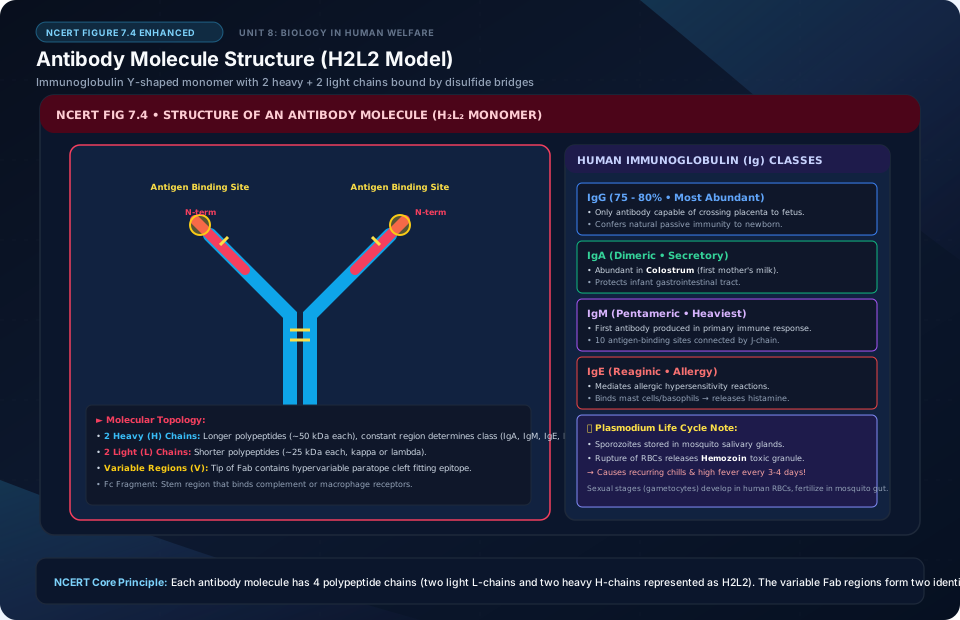
Antibody Molecule Structure (H2L2 Model)
🚨 Examiner Traps & Common Misconceptions
✅ Reality: Organ graft rejection is strictly mediated by CELL-MEDIATED IMMUNITY (T-lymphocytes recognizing foreign MHC markers)!
✅ Reality: An antibody monomer has 4 polypeptide chains: 2 identical Heavy chains and 2 identical Light chains linked by disulfide bridges (H2L2).
💡 Memory Hack & Mnemonic
Five Immunoglobulin Classes: ‘MADGE’ (IgM = largest pentamer, IgA = colostrum/secretions, IgG = crosses placenta, IgE = allergy/mast cells, IgD = B-cell receptor).
⭐ 10/10 Active Recall Self-Check: Chapter 7
Test your mastery before closing this lecture note. Can you answer these without looking back?
- What are the core experimental proofs or physiological steps that define Human Health and Disease in the NCERT syllabus?
- How does the molecular mechanism or ecological interaction covered here operate under changing conditions?
- What are the high-frequency examiner traps or tricky numerical ratios associated with this chapter?
- Can you formulate the primary mnemonic or memory framework for remembering the key components above?
⭐ 10/10 Active Recall Self-Check: Chapter 7
Test your mastery before closing this lecture note. Can you answer these without looking back?
- What are the core experimental proofs or physiological steps that define Human Health and Disease in the NCERT syllabus?
- How does the molecular mechanism or ecological interaction covered here operate under changing conditions?
- What are the high-frequency examiner traps or tricky numerical ratios associated with this chapter?
- Can you formulate the primary mnemonic or memory framework for remembering the key components above?