
10.1 Biotechnological Applications in Agriculture: Genetically Modified Organisms (GMOs), Enhanced Nutritional Quality, Abiotic Stress Tolerance #
Biotechnology provides groundbreaking solutions to agriculture, food production, environmental remediation, and healthcare. In agriculture, crop yield can be increased by: (1) agrochemical-based agriculture, (2) organic agriculture, and (3) genetically engineered crop-based agriculture.
Plants, bacteria, fungi, and animals whose genes have been altered by manipulation are called Genetically Modified Organisms (GMOs). Genetically modified plants offer immense agricultural advantages:
- Made crops more tolerant to abiotic stresses (cold, drought, salt, heat).
- Reduced reliance on chemical pesticides (pest-resistant crops).
- Helped to reduce post-harvest losses.
- Increased efficiency of mineral usage by plants (preventing early exhaustion of soil fertility).
- Enhanced nutritional value of food: Classic example: Golden Rice, a transgenic rice variety enriched with Vitamin A (β-carotene) to prevent nutritional blindness in developing countries.
10.2 Bt Crops (Bt Cotton & Bt Corn): Bacillus thuringiensis Cry Endotoxin Proteins, Protoxin Solubilization in Alkaline Insect Midgut & Epithelial Cell Lysis #
Bt Cotton: A transgenic pest-resistant plant variety engineered to resist destructive lepidopteran insect pests (bollworms):
- The soil bacterium Bacillus thuringiensis forms protein crystals during a particular phase of its growth. These crystals contain a toxic insecticidal protein called Bt toxin.
- Why does the toxin not kill the bacterium? The Bt toxin protein exists as an inactive, non-toxic protoxin inside the bacterium.
- When an insect ingests the inactive protoxin, the protoxin is converted into an active toxin due to the alkaline pH of the insect midgut, which solubilizes the crystals!
- The activated toxin binds to the surface of midgut epithelial cells, creating pores that cause cell swelling, epithelial lysis, and eventual death of the insect larva.
- Specific Bt toxin genes were isolated from B. thuringiensis and incorporated into several crop plants like cotton, corn, and rice. The choice of genes depends on the crop and targeted pest. The toxin is coded by genes named cry:
- Proteins encoded by cryIAc and cryIIAb control cotton bollworms.
- Protein encoded by cryIAb controls corn borer.
10.3 Pest-Resistant Plants via RNA Interference (RNAi): Silencing Specific mRNA of Nematode Meloidogyne incognita in Tobacco Roots using Agrobacterium Vectors #
A novel biological strategy adopted to prevent nematode infestation in plants is RNA Interference (RNAi). A parasitic nematode, Meloidogyne incognita, infects the roots of tobacco plants and causes a great reduction in yield:
- Principle of RNAi: RNAi is a natural cellular defense mechanism present in all eukaryotic organisms. It involves silencing of a specific mRNA due to a complementary double-stranded RNA (dsRNA) molecule that binds to and prevents translation of the mRNA (post-transcriptional gene silencing).
- Mechanism in Tobacco: Using Agrobacterium vectors, nematode-specific genes were introduced into the host tobacco plant. The introduced DNA was designed such that it produced both sense and anti-sense RNA in the host cells.
- These two complementary RNA strands hybridized together to form double-stranded RNA (dsRNA).
- The dsRNA initiated RNAi in the plant cell, cleaving and silencing the specific mRNA of the nematode. Consequently, when the nematode attempted to feed on the transgenic plant, it could not survive because its essential mRNA was silenced! The transgenic tobacco plant was thus rendered completely pest-resistant.
10.4 Biotechnological Applications in Medicine: Genetically Engineered Human Insulin (Humulin by Eli Lilly in 1983 using Separate A and B Chains & Disulfide Bridges) #
The recombinant DNA technological processes have made immense impact in the area of healthcare by enabling mass production of safe and more effective therapeutic drugs. At present, about 30 recombinant therapeutics have been approved for human use worldwide, of which 12 are marketed in India.
Genetically Engineered Insulin (Humulin): Management of adult-onset diabetes requires regular insulin administration. Previously, insulin was extracted from the pancreas of slaughtered cattle and pigs, causing severe allergic immune reactions in many patients:
- Human insulin consists of two short polypeptide chains: Chain A (21 amino acids) and Chain B (30 amino acids) linked together by disulfide bridges.
- In mammals (including humans), insulin is synthesized as a prohormone that contains an extra stretch of peptide called the C-peptide (connecting peptide). The C-peptide is not present in mature, active insulin and is removed during proinsulin maturation.
- The challenge was producing mature insulin without the C-peptide in bacteria: In 1983, Eli Lilly, an American pharmaceutical company, prepared two separate DNA sequences corresponding to Chain A and Chain B of human insulin and introduced them into plasmids of E. coli to produce insulin chains separately.
- Chains A and B were extracted separately and combined by creating disulfide bonds to form mature, active human insulin (Humulin)!
10.5 Gene Therapy: First Clinical Gene Therapy in 1990 for 4-Year-Old Girl with Adenosine Deaminase (ADA) Deficiency using Retroviral Vector in Lymphocytes #
If a person is born with a hereditary disease, can corrective therapies be taken? Gene Therapy is a collection of methods that allows correction of a gene defect diagnosed in a child or embryo. Genes are inserted into a person’s cells and tissues to treat a genetic disease by delivering a normal functional gene to compensate for the non-functional mutant gene.
First Clinical Gene Therapy (1990): Administered to a 4-year-old girl with Adenosine Deaminase (ADA) deficiency. ADA is an enzyme crucial for the normal functioning of the immune system; its absence causes severe combined immunodeficiency (SCID):
- Lymphocytes from the blood of the patient were grown in a culture outside the body.
- A functional ADA cDNA was introduced into these lymphocytes using a disarmed retroviral vector.
- The genetically engineered lymphocytes were returned to the patient.
- Because these lymphocytes are mortal cells with a finite lifespan, the patient required periodic infusions of genetically engineered lymphocytes.
- Permanent Cure: If the functional gene isolated from bone marrow cells producing ADA is introduced into cells at early embryonic stages, it provides a permanent cure!
10.6 Molecular Diagnosis: Advantages of PCR and Enzyme-Linked Immunosorbent Assay (ELISA) over Conventional Serum Analysis #
Early detection of infectious diseases is essential for effective medical treatment. Conventional diagnostic methods (serum and urine analysis) cannot detect pathogens until their numbers have multiplied sufficiently to cause overt clinical symptoms. Modern recombinant molecular diagnostics provide ultra-early detection:
- Polymerase Chain Reaction (PCR): A very low concentration of a bacterium or virus can be detected by amplifying its nucleic acid by PCR. PCR is routinely used to detect HIV in suspected AIDS patients, identify genetic mutations in suspected cancer patients, and detect genetic disorders.
- ELISA (Enzyme-Linked Immunosorbent Assay): Based on the principle of antigen-antibody interaction. Infection by a pathogen can be detected by testing the presence of antigens (proteins, glycoproteins) or by detecting antibodies synthesized against the pathogen.
- Autoradiography with Probes: A single-stranded DNA or RNA tagged with a radioactive molecule (probe) is allowed to hybridize to its complementary DNA in a clone of cells followed by detection using autoradiography. The clone with the mutated gene will not appear on photographic film because the probe has no complementarity with the mutated gene!
10.7 Transgenic Animals: Mice, Sheep, Cows (Rosie producing human alpha-lactalbumin enriched milk in 1997) for Vaccine Safety & Chemical Testing #
Animals that have had their DNA manipulated to possess and express an extra (foreign) gene are known as Transgenic Animals (transgenic rats, rabbits, pigs, sheep, cows, and fish; over 95% of all existing transgenic animals are mice). Transgenic animals are created for:
- Normal Physiology and Development: Specifically designed to study how genes are regulated and how they affect normal bodily functions (e.g., studying role of insulin-like growth factors).
- Study of Disease: Transgenic models exist for many human diseases like cancer, cystic fibrosis, rheumatoid arthritis, and Alzheimer’s disease to test new gene therapies.
- Biological Products: Medicines can be produced in transgenic animal milk:
- Human protein α-1-antitrypsin used to treat emphysema.
- In 1997, the first transgenic cow, Rosie, produced human protein-enriched milk (2.4 grams per liter) containing the human protein alpha-lactalbumin, making it nutritionally far more balanced for human babies than natural cow milk!
- Vaccine Safety Testing: Transgenic mice are being developed for use in testing the safety of vaccines before they are used on humans (e.g., polio vaccine safety).
- Chemical Safety Testing (Toxicity Testing): Transgenic animals made sensitive to toxic substances are exposed to chemicals to obtain toxicity results in much less time.
10.8 Ethical Issues: Genetic Engineering Appraisal Committee (GEAC), Biopiracy & Patent Controversies (Basmati Rice, Neem, Turmeric) #
The genetic manipulation of living organisms by humans cannot go on without biological and ethical regulation. The Indian Government established organizations such as the Genetic Engineering Appraisal Committee (GEAC), which makes decisions regarding the validity of GM research and the safety of introducing GM-organisms for public services.
Biopiracy & Patent Controversies:
- Biopiracy: The term used to refer to the use of bio-resources by multinational companies and other organizations without proper authorization from the countries and people concerned without compensatory payment. Developing nations are rich in biodiversity and traditional biological knowledge, whereas the industrialized world is rich in technology and financial resources.
- The Basmati Rice Controversy: Basmati rice is distinct for its unique aroma and flavor, with 27 documented varieties grown in India. In 1997, an American company got patent rights on Basmati rice through the US Patent and Trademark Office by crossing Indian Basmati with semi-dwarf varieties and claiming it as an invention! Legal action by India prevented this usurpation. Similar patent attempts on Turmeric and Neem were successfully defeated by India.
- The Indian Parliament cleared the second amendment of the Indian Patents Bill, which takes into account patent terms, emergency provisions, and research and development initiatives.
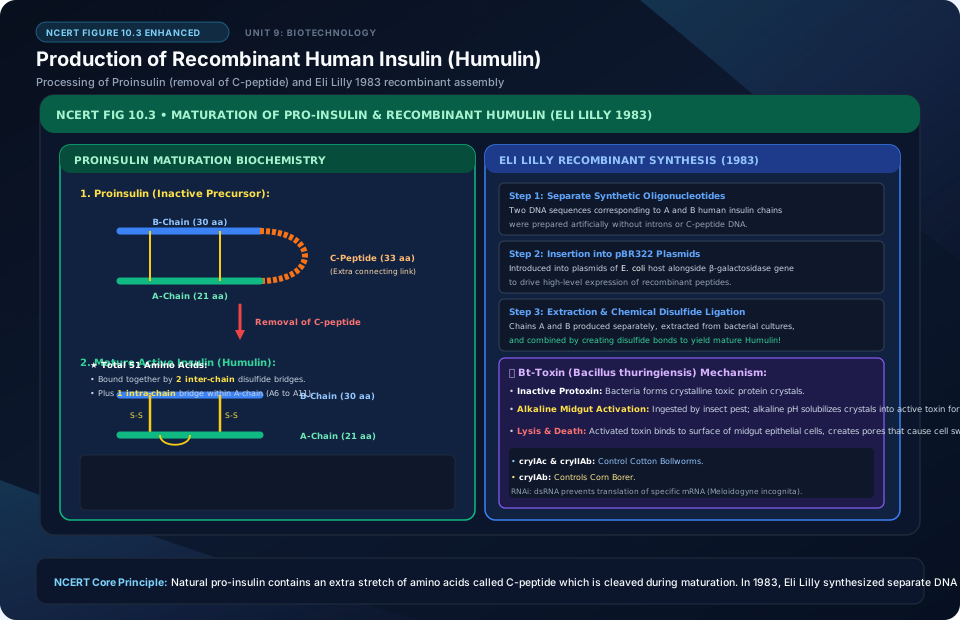
Production of Recombinant Human Insulin (Humulin)
🚨 Examiner Traps & Common Misconceptions
✅ Reality: The Cry protein exists as an inactive non-toxic PROTOXIN inside the bacterium! It only becomes toxic when dissolved by the ALKALINE pH of the insect midgut.
✅ Reality: Natural proinsulin contains an extra connecting C-peptide that is cleaved off during maturation; Eli Lilly synthesized A and B chains separately to bypass C-peptide removal!
💡 Memory Hack & Mnemonic
Cry Genes & Target Insects: ‘CryIAc and CryIIAb control Cotton Bollworms; CryIAb controls Corn Borer’.
⭐ 10/10 Active Recall Self-Check: Chapter 10
Test your mastery before closing this lecture note. Can you answer these without looking back?
- What are the core experimental proofs or physiological steps that define Biotechnology and its Applications in the NCERT syllabus?
- How does the molecular mechanism or ecological interaction covered here operate under changing conditions?
- What are the high-frequency examiner traps or tricky numerical ratios associated with this chapter?
- Can you formulate the primary mnemonic or memory framework for remembering the key components above?
⭐ 10/10 Active Recall Self-Check: Chapter 10
Test your mastery before closing this lecture note. Can you answer these without looking back?
- What are the core experimental proofs or physiological steps that define Biotechnology and its Applications in the NCERT syllabus?
- How does the molecular mechanism or ecological interaction covered here operate under changing conditions?
- What are the high-frequency examiner traps or tricky numerical ratios associated with this chapter?
- Can you formulate the primary mnemonic or memory framework for remembering the key components above?