
 SVG
SVGGel Electrophoresis In Dna Fingerprinting
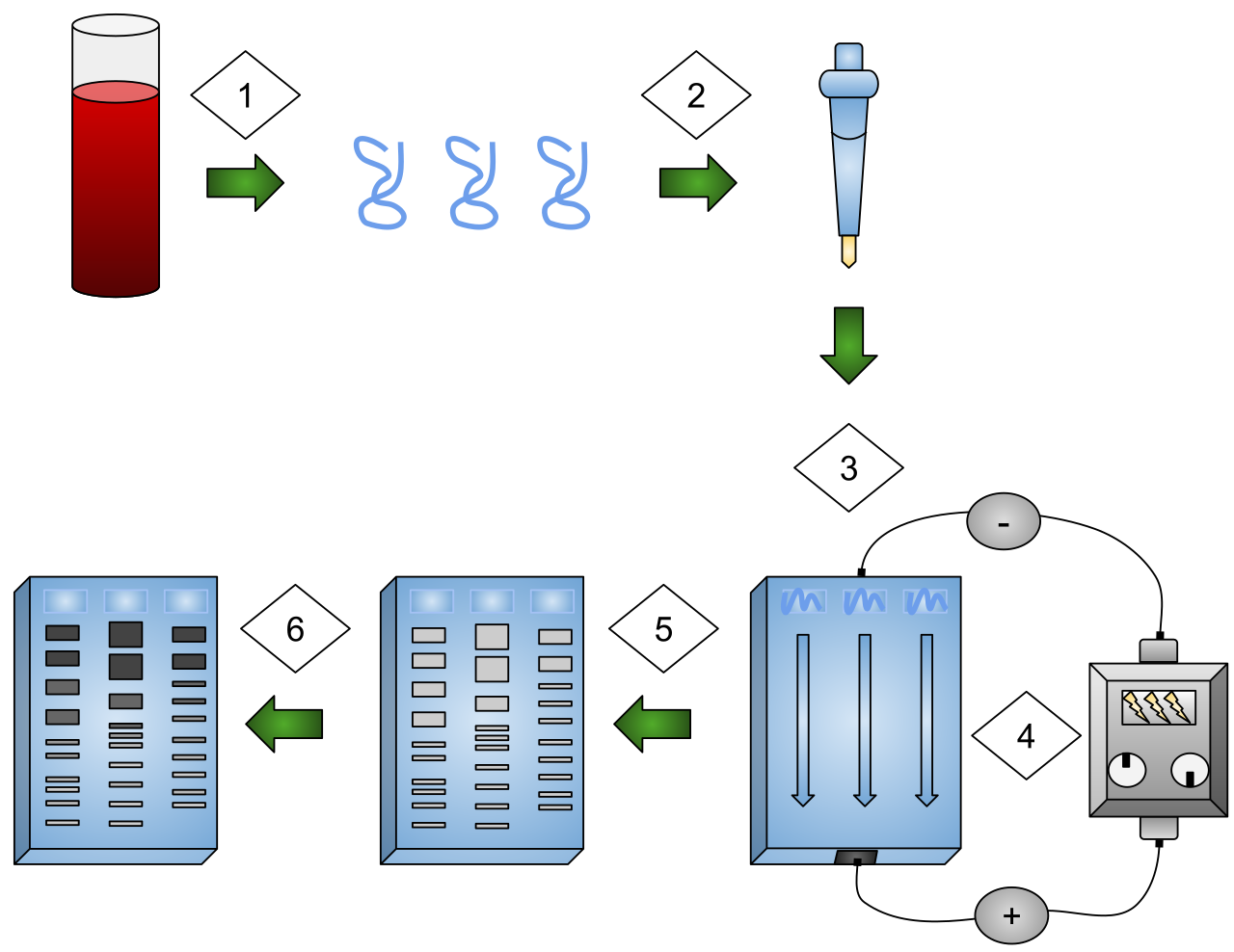
This is a diagram that illustrates the process of Gel electrophoresis. Gel electrophoresis is used for DNA fingerprinting, and is very useful in crime investigation since every individual has different DNA patterns. DNA can be extracted from any sample of body fluid(i.e. blood, semen, or saliva). DNA is mixed with restriction enzyme and amplified with PCR. The mixture of DNA fragment plus restrict
 SVG
SVGGenome Editing With The Crispr Cas9 Method, Schematic
The molecular machinery of the central dogma governs genetic storage, replication, transcription, and translation in living systems.
 SVG
SVGGolden Gate Assembly
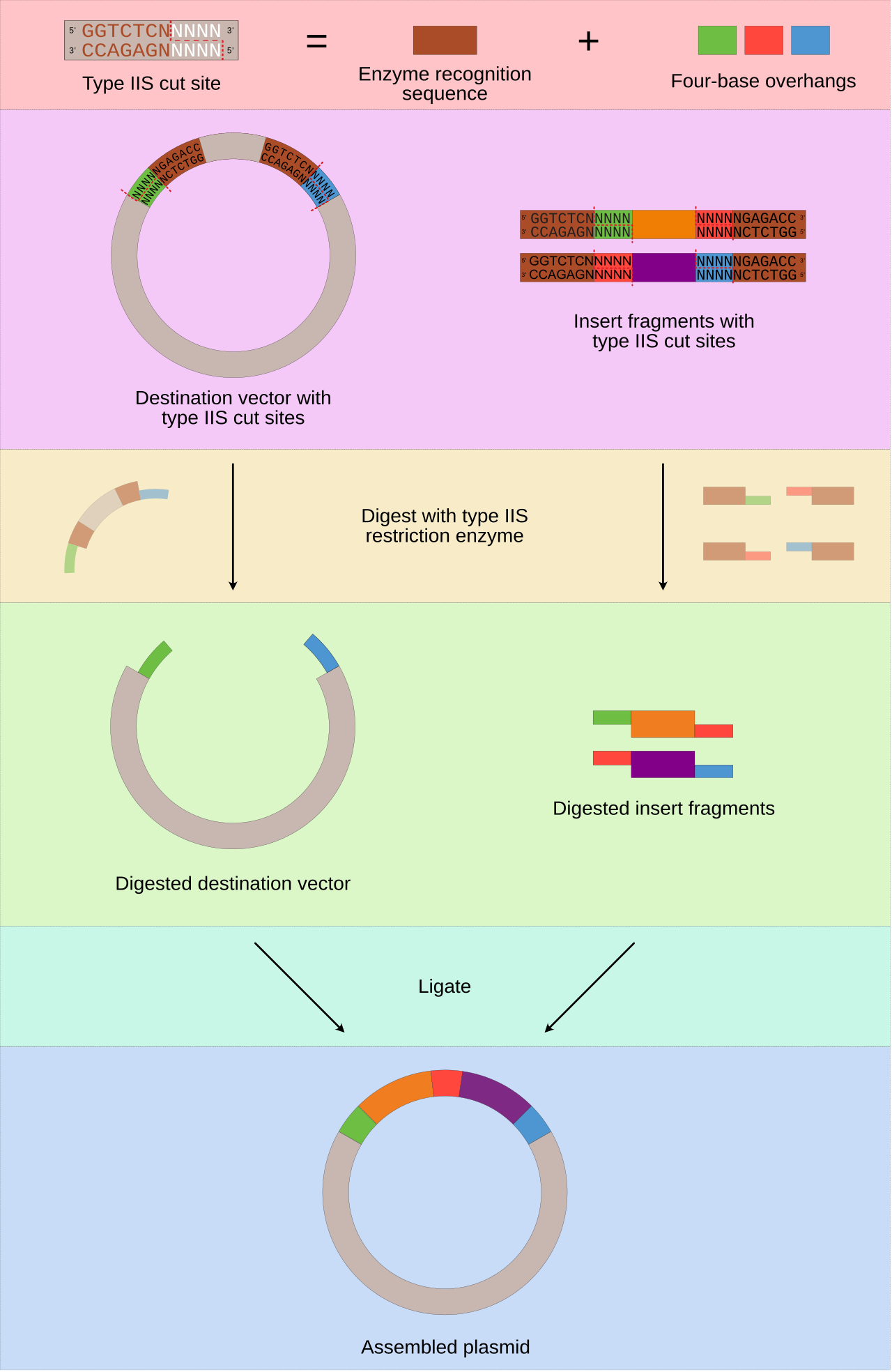
Golden Gate assembly involves digesting DNA sequences containing a type IIS restrection enzyme cut site and ligating them together.
 SVG
SVGPbr322 Map
The molecular machinery of the central dogma governs genetic storage, replication, transcription, and translation in living systems.
 SVG
SVGPcr
Diagram of PCR reaction to demonstrate how amplification leads to the exponential growth of a short product flanked by the primers. Schematic drawing of the PCR cycle. Denaturing at 96°C. Annealing at 68°C. Elongation at 72°C. The first cycle is complete. The two resulting DNA strands make up the template DNA for the next cycle, thus doubling the amount of DNA duplicated for each new cycle.
 SVG
SVGReverse Transcription Polymerase Chain Reaction Scheme
Schematic diagram of RT-PCR showing that RNA isolated from cells or tissue is used as substrate in reverse transcription for synthesis of cDNA that will serve as template for amplification by PCR (denaturation, annealing, extension). Based on Santos et al. (2004), DOI: 10.1590/S1678-77572004000100002.
 SVG
SVGCrispr-Cas9 Mode Of Action - Ru
A duplex of crRNA and tracrRNA acts as guide RNA to introduce a specifically located gene modification based on the RNA 5’ upstream of the crRNA. Cas9 binds the tracrsRNA and needs a DNA binding sequence (5’NGG3’), which is called protospacer adjacent motif (PAM). After binding, Cas9 introduces a DNA double strand break, which is then followed by gene modification via homologous recombination (HDR) or non-homologous end joining (NHEJ).
 SVG
SVGElisa-Sandwich
A sandwich ELISA . (1) Plate is coated with a capture antibody; (2) sample is added, and any antigen present binds to capture antibody; (3) detecting antibody is added, and binds to antigen; (4) enzyme-linked secondary antibody is added, and binds to detecting antibody; (5) substrate is added, and is converted by enzyme to detectable form.
 SVG
SVGElisa Or Lateral Flow Formats
Schematic showing the differences between sandwich format vs competitive binding format of implementing lateral flow assays or ELISA. Inspired from design by nanocomposix ( https://nanocomposix.com/pages/introduction-to-lateral-flow-rapid-test-diagnostics#target )